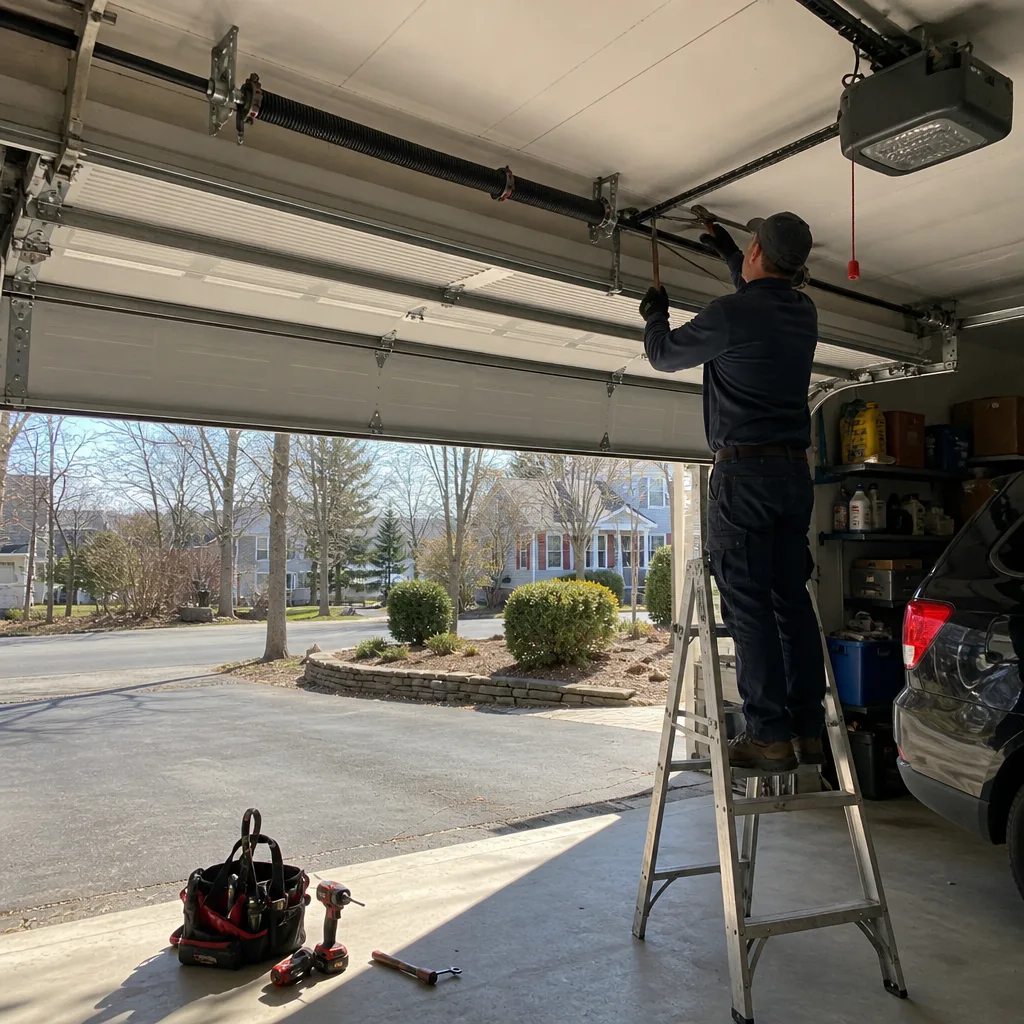
Last updated November 22, 2026
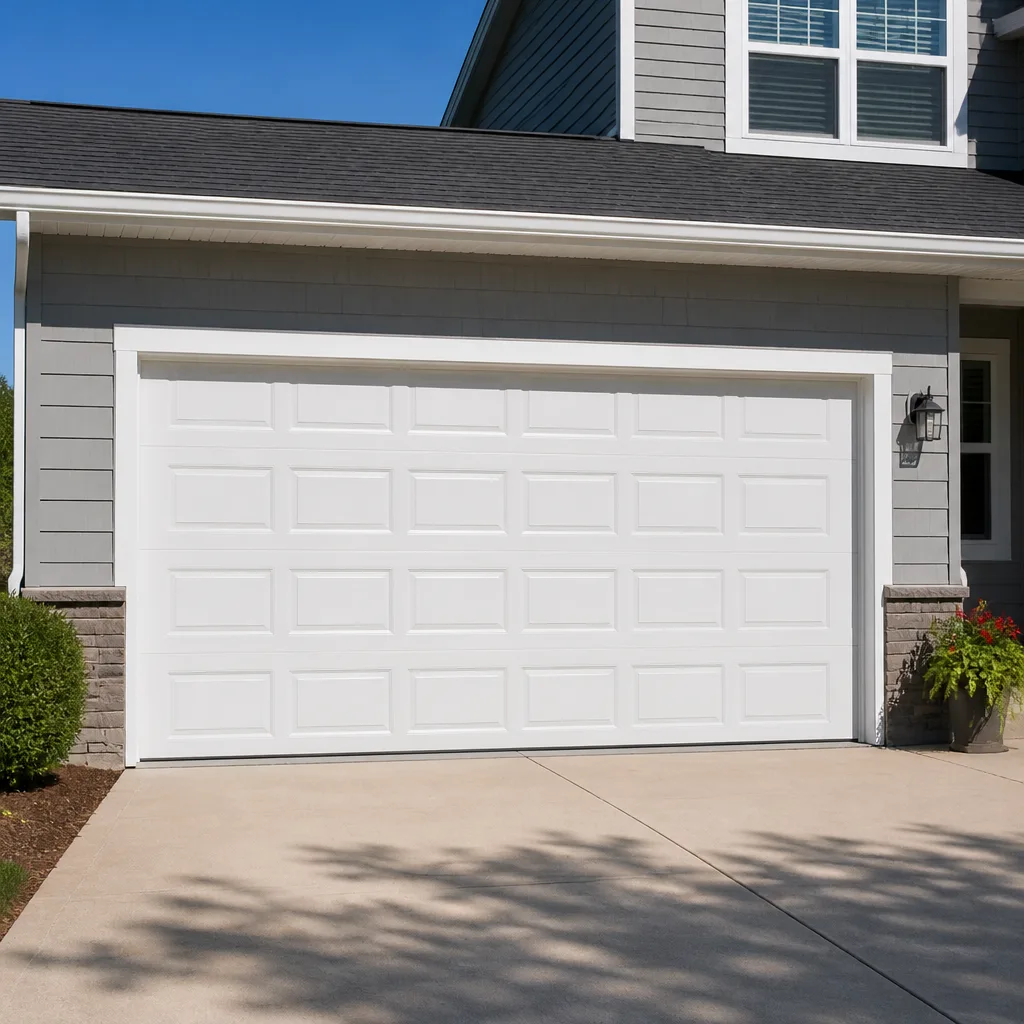 Raised-panel steel
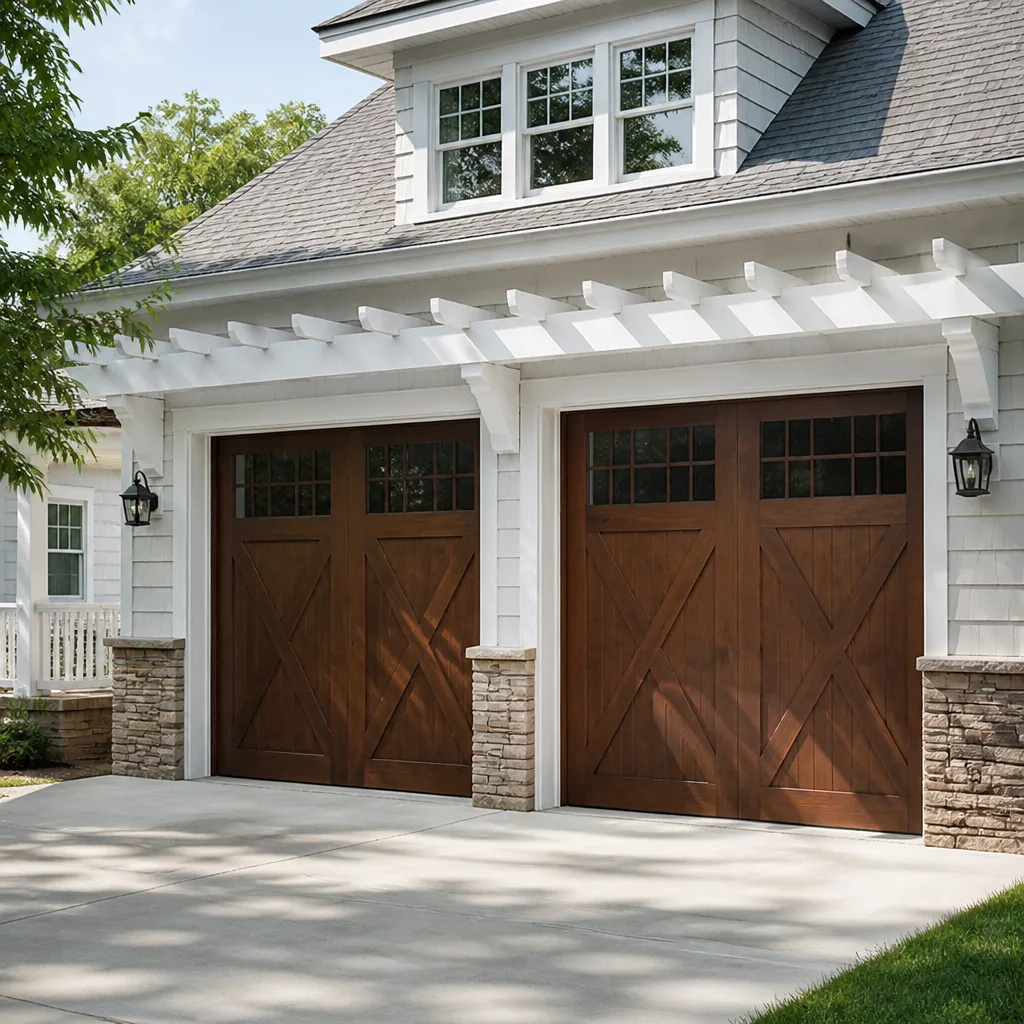 Carriage house
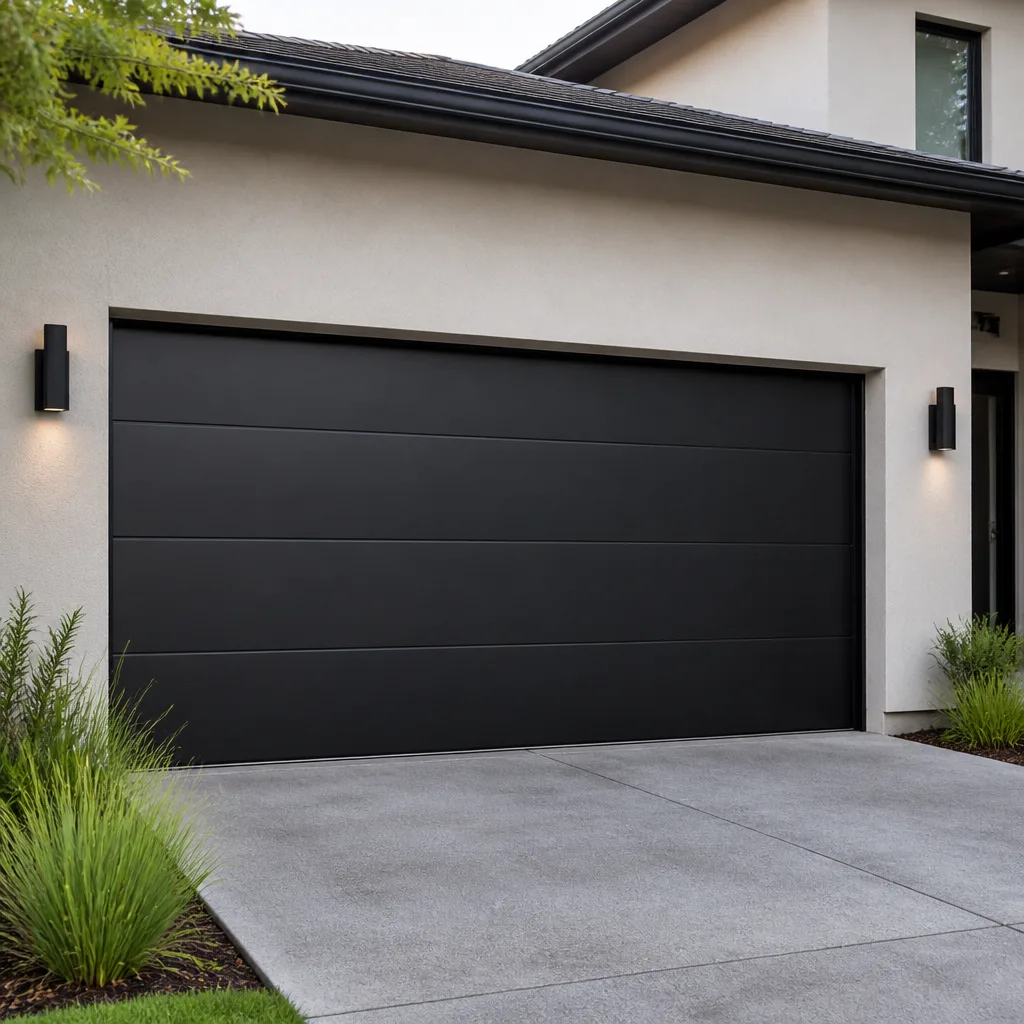 Modern flush
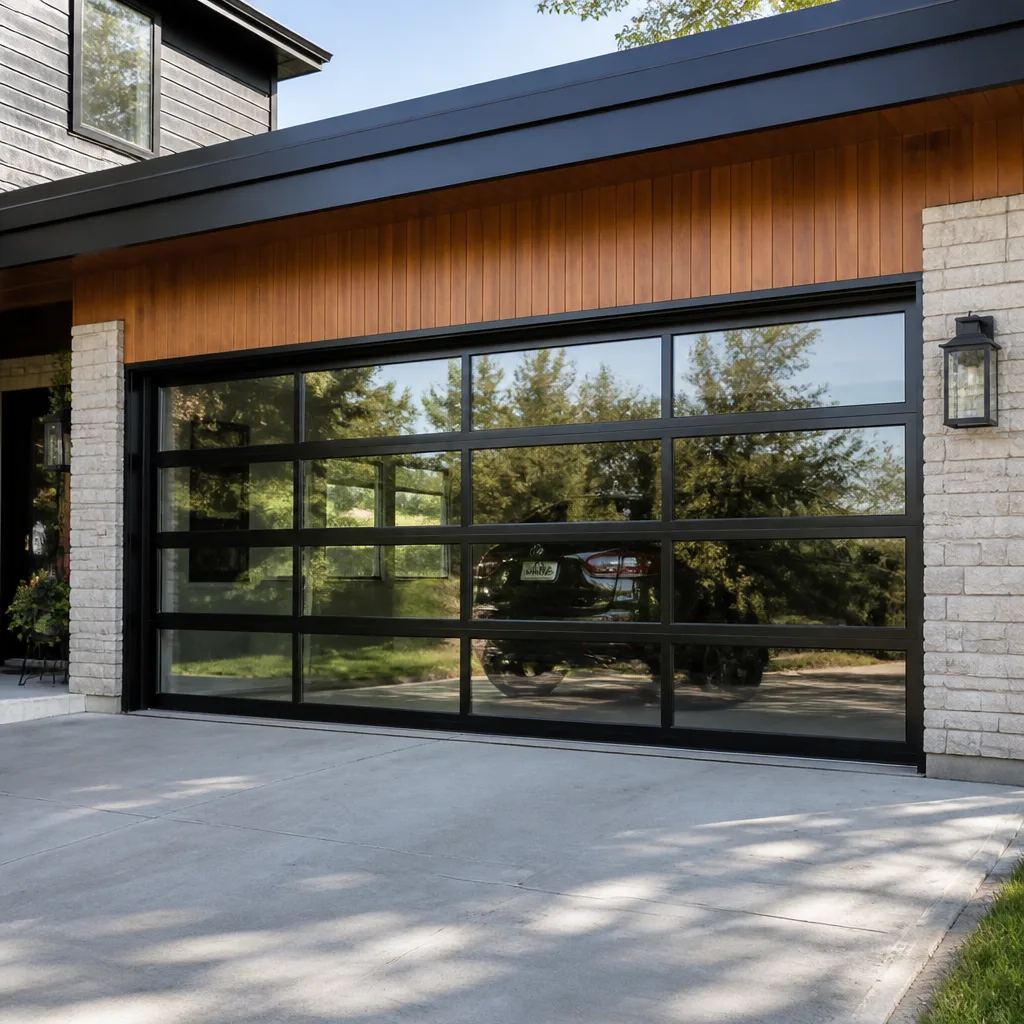 Full-view glass
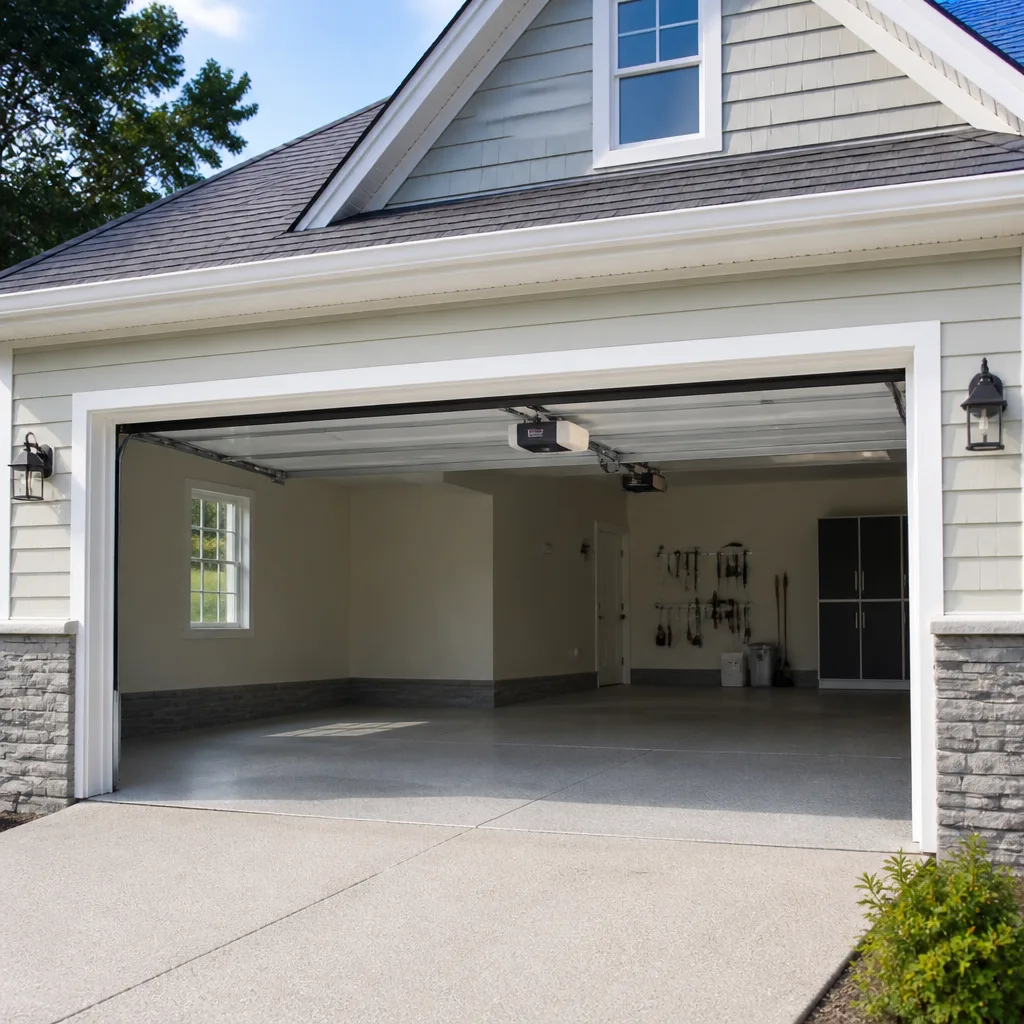 LiftMaster openers
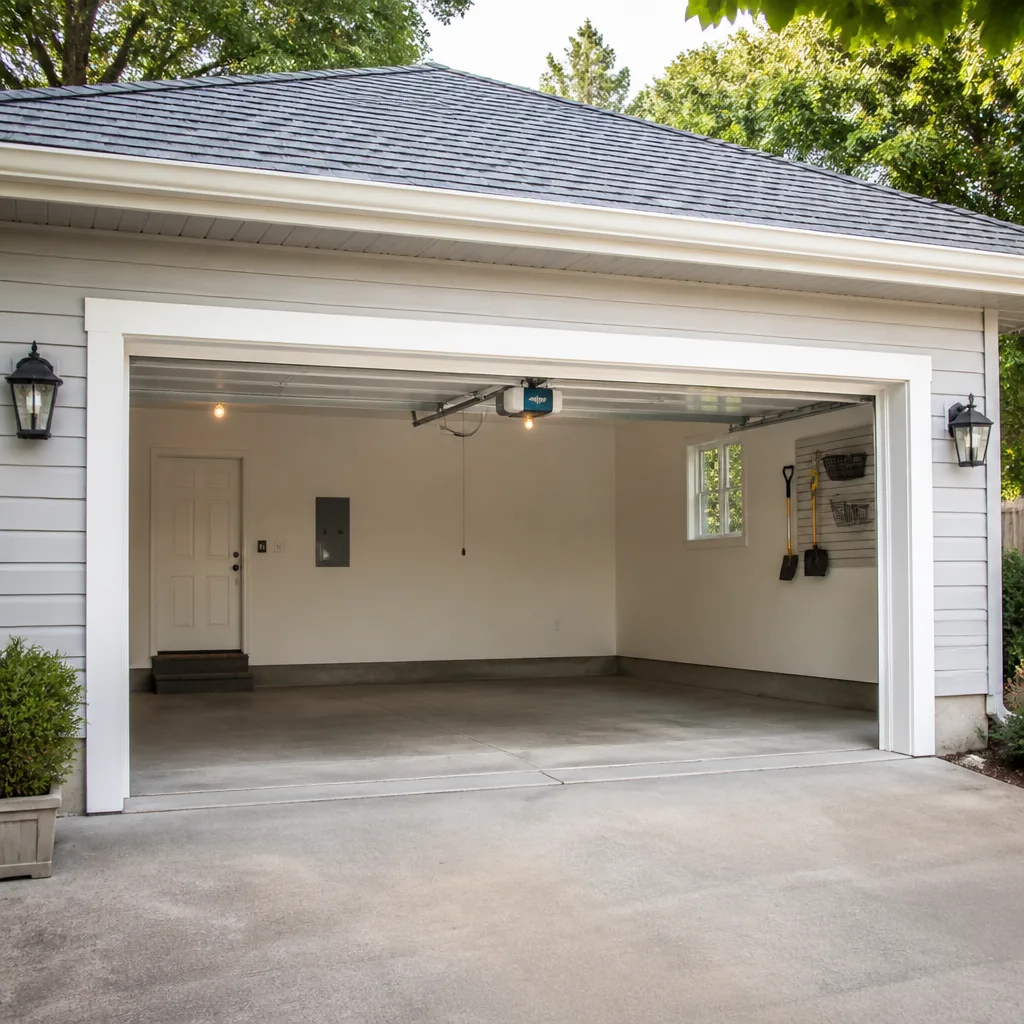 Chamberlain openers
Full 25-point door and opener safety check with every visit - springs, cables, rollers, tracks, and your LiftMaster or Chamberlain opener included
You get a price before we start. It does not change when the pro arrives.
Get your free estimateGarage Door Warning Signs: A Lowell Homeowner’s Reference Guide
Most guides to garage door problems hand you a list of symptoms and stop there: door won’t open, door is noisy, door looks crooked. That tells you something is wrong. It doesn’t tell you what. We take a different route. We work backward from the mechanical cause, because that’s the part that decides whether you’re looking at a forty-dollar roller swap or a spring replacement that costs real money. A garage door that hesitates for two seconds before it moves isn’t a minor annoyance you can ignore until next month. That pause is the opener’s logic board compensating for lost spring tension, and it’s quietly measuring how much time you have before the door stops lifting altogether. This guide covers the sounds, the visual clues, and the behavior changes that point to a specific failing part, so you can judge urgency before you pick up the phone. It’s written for Lowell homes, where older housing stock and cold winters both leave their fingerprints on door hardware.
Quick Answer
The warning signs that matter most on a residential garage door are a hesitation before the door moves, grinding, squealing or popping sounds, a torsion spring with a visible gap or heavy rust, a door that reverses before closing, an opener that travels slower than it used to, and cracks that flex when the door is in motion. Of those, a broken spring, a door that reverses or won’t stay down, and any sound of metal grinding under load need same-day attention because they can escalate into a door that drops or a security gap that stays open. Squeaks, cosmetic scuffs, and slow remotes usually wait for a scheduled visit. The sections below map each sign to the part that’s actually causing it.
Styles & brands we work with
- Raised-panel steel
- Carriage house
- Modern flush
- Full-view glass
- LiftMaster openers
- Chamberlain openers
Table of Contents
- Matching the Sound to the Failing Part
- Reading Torsion Spring Wear from the Floor
- Decoding Opener Behavior Changes
- Stress Cracks vs. Cosmetic Cracks on Panels
- Track, Roller, and Hardware Warning Signs
- Which Signs Need Same-Day Attention and Which Can Wait
- How a Lowell Winter Changes the Warning Signs
- What We See on Doors Across Lowell
Matching the Sound to the Failing Part
Sound is the most reliable early warning your door gives you, and it’s also the most misunderstood. A homeowner hears a noise and describes it as “the door is loud,” when the difference between a squeal and a pop is the difference between a lubrication job and a worn spring. If you can name the sound precisely, you’re already ahead of most service calls.
Here’s how the three most common sounds map to the mechanical system that produces them:
- Grinding comes from metal-on-metal contact. Most often it’s a steel roller that has seized in its bracket and is dragging along the track instead of rolling, or rollers that have worn through their bearings. It can also come from a bent track section forcing the wheel to scrape. Grinding usually gets worse the longer you wait, and it accelerates wear on the panels the rollers attach to.
- Squealing is a high, thin sound, and it points to friction somewhere in the moving hardware chain: rollers, hinges, the torsion shaft bearings, or the opener rail. It’s typically a lubrication and adjustment issue rather than a broken part, which makes it one of the cheaper sounds to make disappear. If the squeal only happens at one point in the door’s travel, it’s tracking a specific hinge or roller.
- Popping or a sharp bang is the sound of stored energy releasing abruptly. A torsion spring that snaps produces one loud report, followed by a door that will not lift. A popping that repeats each cycle is often a roller binding hard enough to slip free, or a hinge plate pulling loose from fatigued steel. A single loud pop that changes how the door behaves afterward needs same-day attention, because the door is now operating off-balance.
In a Lowell winter, the cold pushes these sounds up a notch. Damper, heavier grease in older rollers and cold-stiffened weather seals make friction worse, so a door that squeaked faintly in October can be loud by January. If you want a broader look at the repair options behind each sound, our guide to garage door repair walks through what’s involved.
Reading Torsion Spring Wear from the Floor
You can assess your torsion springs safely without touching them. A torsion spring is a coiled steel bar under heavy tension, and it will injure you if you put a tool to it. So don’t. Everything below is something you can see from standing on the garage floor, looking up.
Here’s the visual checklist we’d walk you through:
- Look for a gap. A healthy torsion spring is a continuous coil. A single clean gap of an inch or more in the coil means the spring has broken. The door will likely feel extremely heavy or won’t lift at all.
- Check the color of the coil. Light surface rust is normal in older doors. Heavy, flaking rust along the wire suggests the spring is older and closer to fatigue. It’s a prompt to have it inspected, not a guarantee of imminent failure.
- Watch the coil during a cycle. Stand to the side, clear of the door, and run it once. A spring that barely winds or one that’s visibly slumping on the shaft is losing its lifting capacity.
- Look at the winding cones. The cones at each end of the spring hold the tension. If you can see the spring has shifted out of position on its cones, stop operating the door and call.
- Listen for the report. If you heard a loud bang from the garage and the door stopped working, the spring is the most likely cause. Don’t force the opener to lift a door with a broken spring; it will strip the opener’s gears.
If a spring is gone, the repair is precision work, not a hardware store swap. We offer spring work as its own dedicated service, because this is the single most dangerous component on the door and the one that fails most often. Prices are quoted and agreed before any work begins. If you want the detail on how a spring repair job actually runs, see our garage door spring repair page.
Decoding Opener Behavior Changes
Your opener is the smartest part of the system, and it’s constantly telling you what it thinks. Most homeowners read the message as “the opener is broken” when the opener is actually compensating for wear somewhere else. Here’s how to decode what you’re seeing.
- Slower travel than before. If the door takes longer to open or close than it used to, the opener’s motor is working harder to lift weight that the springs should be carrying. This is the single most common sign of spring tension loss, and it’s the symptom most people miss entirely.
- The two-second hesitation. Every opener runs a short travel test on start. When it stops mid-start and then moves, the logic board has detected resistance beyond what it expects, which almost always traces back to weakening springs or a binding roller.
- Reversing mid-cycle. A door that starts down, stops, and goes back up is tripping the safety reverse. That can be caused by the photoelectric safety sensors being knocked out of alignment, or by resistance in the track that the opener reads as an obstruction. Don’t disable the safety reverse; find the source.
- Remote lag or a dead remote. If the wall button works but the remote doesn’t, or you have to press the remote several times, the problem is the remote battery, the receiver circuit, or the radio frequency logic. That’s a much cheaper fix than a new opener, and worth checking before you replace anything.
- Lights flashing and the door unresponsive. Many openers signal a fault by flashing their bulbs. On a garage door opener repair call, the technician matches the flash pattern to the diagnostic code for that model.
We work on the legacy platforms many Lowell homes still run, like Genie and Craftsman, and on the connected ones that newer installations use. A Lowell Garage Door Repair Pros technician who knows that a Chamberlain unit or an Amarr door has its own specific diagnostic routine won’t spend the first thirty minutes reading a manual. Our technicians have up to 11 years of experience across those platforms.
Stress Cracks vs. Cosmetic Cracks on Panels
Not every crack in a garage door panel is a problem. Some are scratches or surface marks in the paint. Some are structural failures that will spread and eventually cause the panel to buckle. The difference comes down to where the crack is, what the panel is made of, and whether it moves when the door does.
Materials behave differently, and it’s worth knowing which one you have:
- Steel panels. Look along the fold lines and the area around the hinges and roller brackets. A crack radiating from a fastener hole is a stress crack; it comes from repeated flexing at that attachment point. A crack that runs across a flat panel with no fastener nearby is usually cosmetic, especially if it’s in a paint layer.
- Wood panels. Cracks along the grain are often cosmetic. Cracks that run across the grain, or that appear at joints and seams, are flexing under load and are structural. Wood is also the most weather-sensitive of the panel materials in a Lowell winter, where freeze-thaw cycles work on every joint.
- Composite panels. Composite door faces can develop fine surface crazing that’s purely a finish issue. A crack that widens when the door is in motion or that lets light through is a different story and needs inspection.
Here’s the practical test you can run safely, without hands on the door: open the door roughly halfway and look along the edge of the panel in question. Watch for a change in the crack gap at the bottom of the travel versus the top. A crack that opens wider under load is moving, and a moving crack means the panel is no longer holding its shape. Note where it sits on a Clopay or Amarr panel, since the repair or replacement approach depends on whether that section is still in production. Don’t be the person who replaces a cosmetic-crack panel when the door needed a hinge adjustment.
Track, Roller, and Hardware Warning Signs
The track and hardware are the parts that get ignored until they fail loudly. They’re also the cheapest to keep ahead of. A track that’s slightly bent, or a hinge that’s starting to delaminate, is a small adjustment now and a bigger bill later if it’s allowed to drag the door for another season.
Run through this checklist roughly once a year, or any time the door starts behaving differently:
- Check track alignment by eye. The two vertical tracks should look parallel, with a straight, even gap between them and the door. A track that’s been knocked inward (very common after a car bumper catches it, or after a heavy snowbank pushes against the frame) forces the rollers to bind.
- Look for loose hardware. Hinges, brackets, and the track mounting bolts should be snug. A rattle that appears under load is often one hand-tightened bolt working loose.
- Check the rollers. Worn steel rollers can be flat-spotted, which shows up as a bump in the door’s travel. Nylon rollers can develop cracks in the wheel. Either one is a routine replacement, not a rebuild.
- Look at the cables. The lift cables should be taut and centered on their drums, with no fraying or kinks. A frayed cable is a safety issue; stop using the door and have it looked at.
- Check the bottom seal. The weather seal along the bottom edge should sit flush against the floor. In a Lowell winter, a seal that’s stiffened or torn lets cold air and moisture in, and lets snowmelt freeze the door to the floor. A frozen door is a common winter call, and it can strip the opener if you keep pushing.
When you’re ready to schedule it, our team’s free estimate in Lowell starts with a full look at the track, rollers, and hardware. If the door is beyond repair, we also handle full garage door repair and replacement, so one call covers the whole problem.
Which Signs Need Same-Day Attention and Which Can Wait
This is the section everyone wants at the top of the page, and for good reason. Sorting a scary-sounding sign into “emergency” or “wait” is the whole point of a warning-sign guide, because the wrong call either wastes an urgent visit or lets a manageable problem turn into a dangerous one.
Needs same-day attention:
- A torsion spring that has visibly broken (a gap in the coil, or a door that won’t lift under the opener’s power at all).
- A door that reverses on its own and won’t stay closed. Your home’s security boundary is open until that’s fixed.
- Any grinding under load that’s getting louder by the cycle.
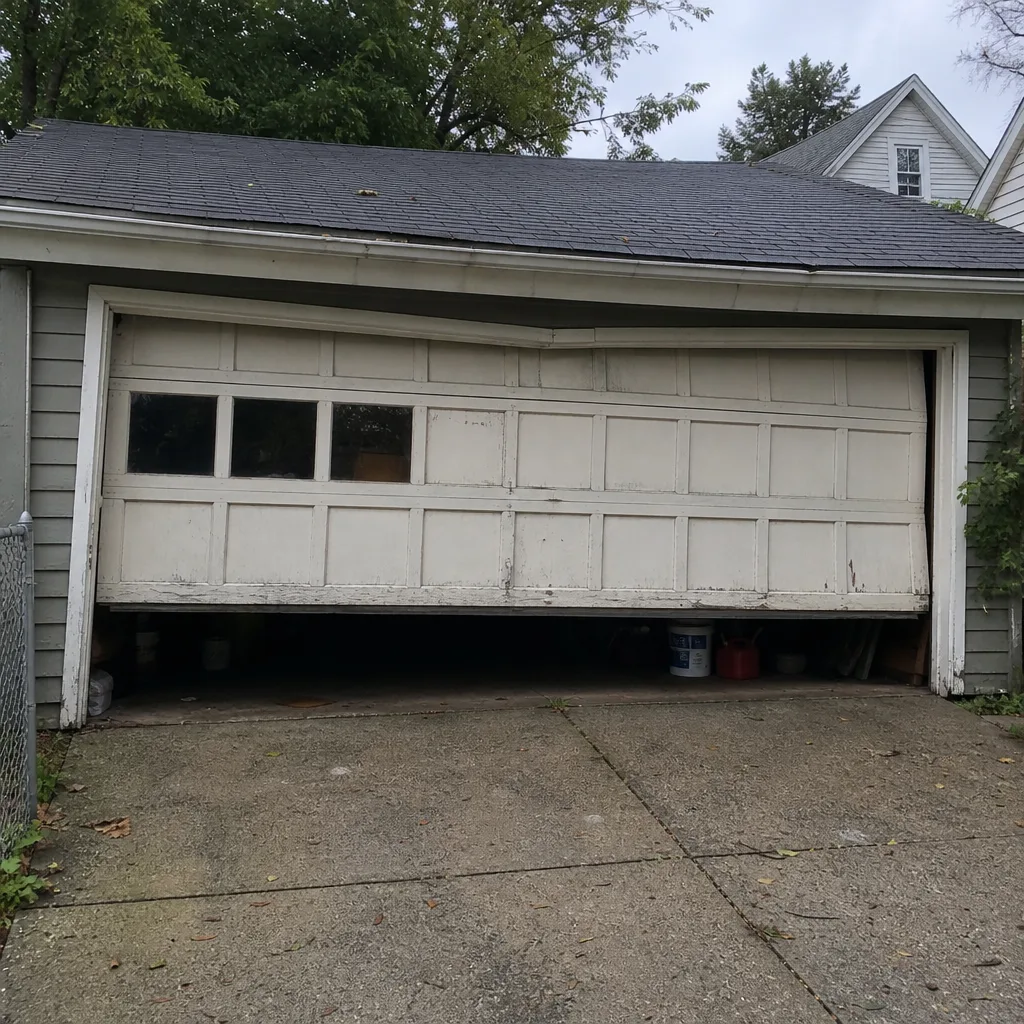
- A door that’s crooked in the opening, with one side visibly higher than the other. That’s a sign of a cable or spring failure, and lifting it can make it drop.
- A door that’s off the track or wedged in the opening.
Can be scheduled on a normal visit:
- Squeaking and light grinding that hasn’t changed the door’s movement.
- A single slow remote, or a remote that needs a fresh battery.
- Cosmetic cracks and surface rust.
- A door that’s louder than it used to be but still runs smoothly.
- A bottom seal that’s worn but intact.
If you’re not sure which bucket you’re in, call and describe what you see and hear. If it’s urgent, emergency service is a real offering for us in Lowell, not an upsell, and we’d rather help you sort the sign over the phone than have you wait on a door that might come down. For the repair-side options on anything on that emergency list, our garage door repair page is the place to start.
How a Lowell Winter Changes the Warning Signs
Garage door hardware hates winter, and a Lowell winter is a stress test. New England cold does three things to a door at once, and each of them makes a mild sign look like a major one.
First, cold stiffens the moving parts. Grease in older rollers thickens, the weather seals harden, and the whole assembly has more friction to overcome. A door that squeaks faintly from June to October can sound like a rock crusher in February, and it’s not necessarily a worse mechanical problem, just a colder one. Second, freeze-thaw cycles work on the bottom of the door. Snowmelt runs under the door, freezes overnight, and the next opening cycle has to break a bond of ice. That’s a lot of strain on the opener and the bottom panel. Third, older wood panels swell and shrink through the season, which stresses the joints and can widen hairline cracks.
What to watch for once the temperatures drop in Lowell:
- A door that lifts but drags on the way down. That’s usually the bottom seal bonding to a frozen floor. Clear the ice before running the door again.
- A sudden increase in opener strain. If your opener sounds like it’s working harder in January than in November, check the springs first, then the rollers and the snow load on the door.
- Rust appearing on the spring. Road salt tracked in from the car and moisture in the garage accelerate spring corrosion. Heavier rust is a prompt for inspection.
- Track movement from snow. Snowbanks pushed against the door frame can nudge the vertical track. If the door starts binding hard against one side, check the track as soon as the snow clears.
None of this is a reason to panic. It’s a reason to look at your door in December with the same attention you give the furnace, rather than waiting for the noise in February.
What We See on Doors Across Lowell
Garage door wear is not uniform across Lowell. The city’s housing is a mix, and the age and style of the house shape what breaks first. In the older neighborhoods, the doors tend to be the original wood or early steel units, and the warning signs show up in panels and hinges before they show up in springs. Wooden door faces develop joint cracks through the seasons, and older hinges pull loose from the panels they’re bolted to. In the newer residential areas, the doors are more likely to be modern steel or composite sections paired with a smart opener, and the warning signs are usually electronic: a remote that’s lost its programming, a Wi-Fi opener that’s dropped off the network, a safety reverse sensor that’s been nudged out of alignment.
Lowell’s snow season also means the bottom-of-door hardware takes a beating. The bottom section and bottom seal are the first parts we look at on any door that spends the winter facing a driveway that collects plowed snow. Tracks that have been nudged by a car or a snowbank, rollers full of grit from the road, and seals with a frozen-in crease are all common in the city’s neighborhoods. If you’ve got a Clopay or Amarr steel door, the section-by-section construction makes those bottom-panel repairs straightforward once you know which section has failed.
What ties it together is that the warning signs are the same everywhere in Lowell, and the mechanical order of suspicion is the same too. Springs first, then rollers and track, then opener electronics, then panels. The right fix for a Lowell door is often a smaller job than the homeowner feared, and that’s the conversation we’d rather have with you before the door stops.
Common Mistakes to Avoid
- Assuming the opener is the problem. A slow or hesitating door is more often a spring losing tension than an opener that’s failing. Replacing the opener without checking the springs is money spent on the wrong repair.
- Running the door on a broken spring. Forcing a heavy door up with the opener burns out the gears and can send the door down hard. Stop using the door and call.
- Touching the torsion spring. This is the one part of the system no homeowner should attempt. A wound torsion spring holds enough energy to cause serious injury, and it requires the right winding bars and the training to use them.
- Spraying any lubricant on the track. Tracks should stay clean and dry. Lubricant on the track attracts grit and makes the rollers slide rather than roll. If you’re lubricating anything, it’s the rollers, hinges, and the spring coils, and only with the right product for each.
- Disabling the safety reverse to stop a reversing door. If the door reverses, that’s the safety system doing its job. Disabling it is the most dangerous shortcut on the whole door. Find the obstruction or alignment issue instead.
- Replacing a panel when an adjustment would do. A crack that hasn’t moved after a full cycle is usually a finish issue. A crack that changes width under load is the one that needs a panel.
- Ignoring a winter seal. A door that lifts hard every February morning is often just frozen to the floor. Clear the ice and schedule a seal replacement before the opener takes the strain.
See the difference
 Before
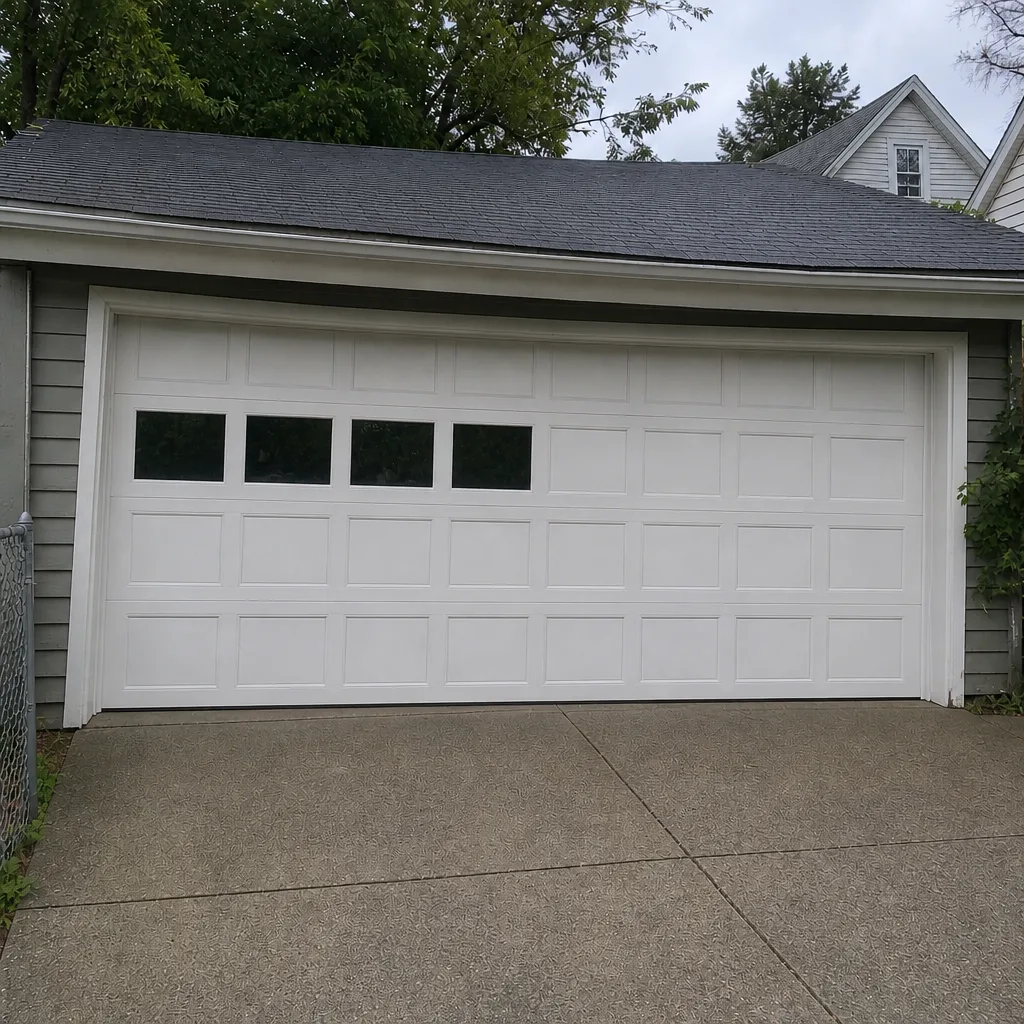 After
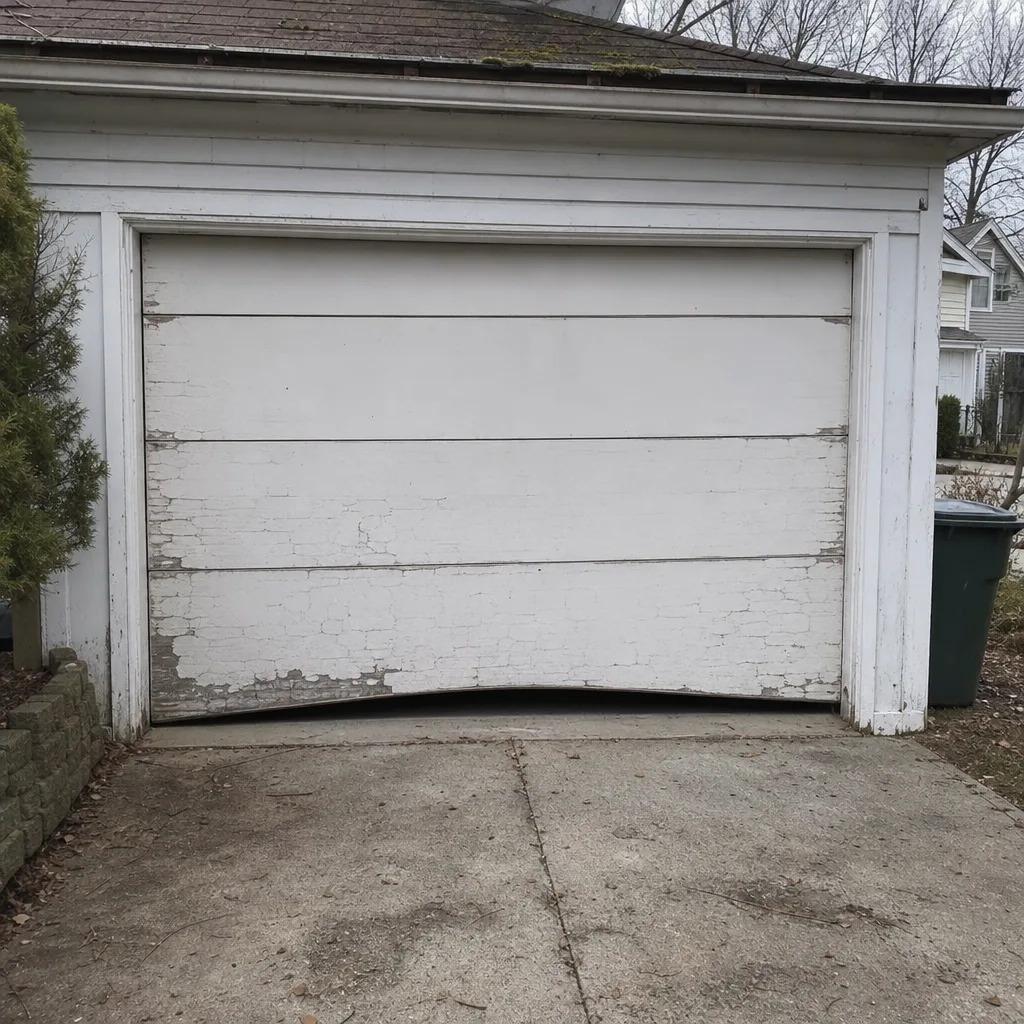 Before
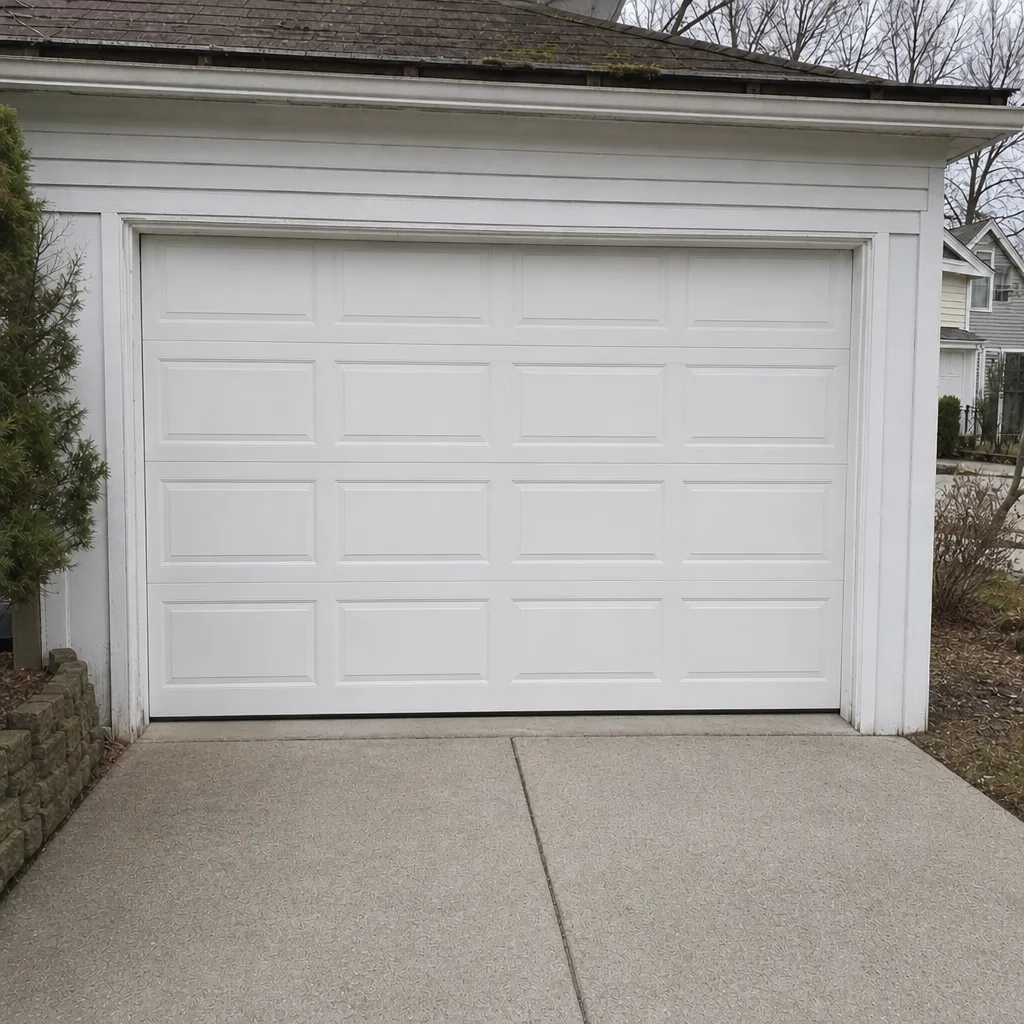 After
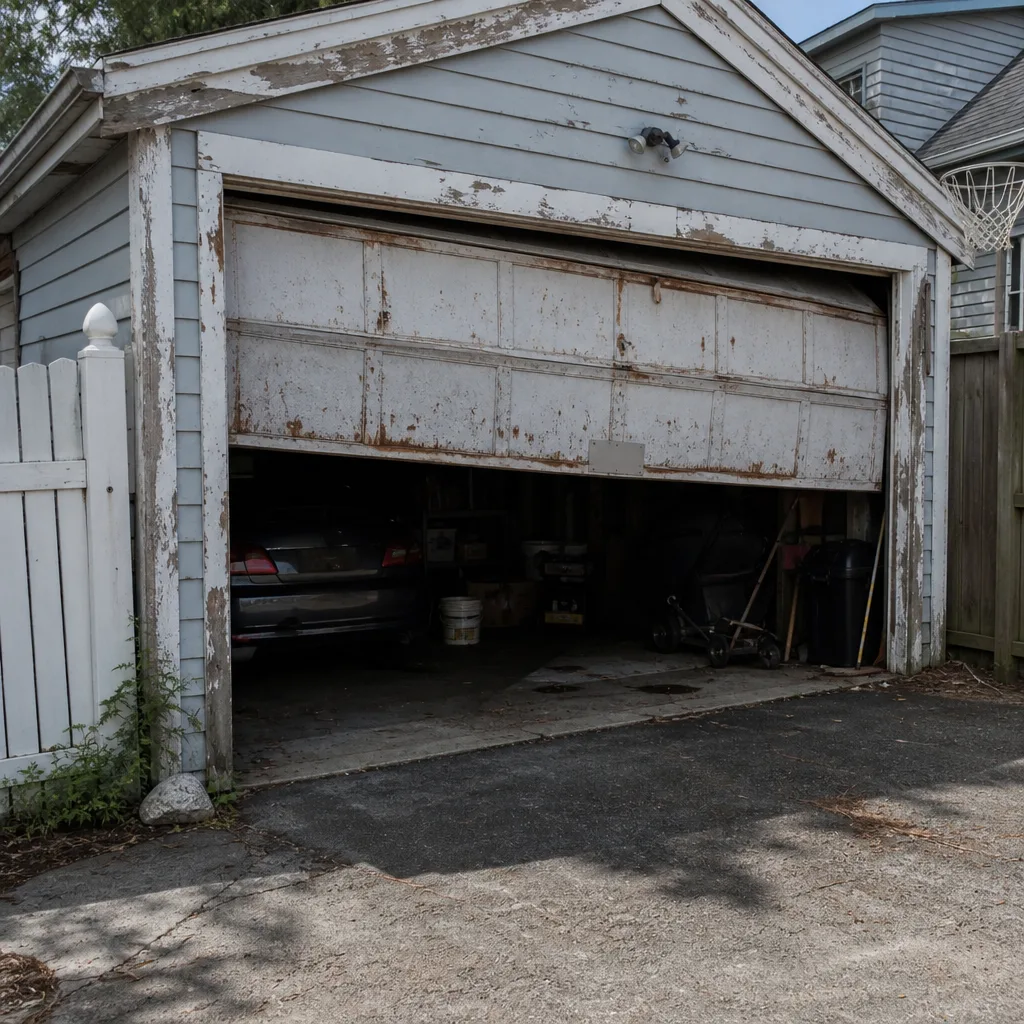 Before
 After
When to Call a Professional
Call a professional whenever the sign involves the springs, the cables, or the track. Those three are the parts of the door where a wrong move can injure someone or drop a door. A broken torsion spring, a door off its track, a frayed lift cable, or a door that reverses and won’t close should all get a same-day call, not a weekend of inspection. The same goes for anything that’s changed the way the door moves, not just the way it sounds. Squeaks and slow remotes can wait for a normal visit; a door that’s heavier, crooked, or unpredictable cannot. Lowell Garage Door Repair Pros offers free estimates in Lowell. Call (833) 509-5209, describe what the door is doing, and we’ll tell you whether it’s urgent or whether it can be scheduled. The written estimate sets the final price, and it’s agreed before any work starts.
Frequently Asked Questions
Watch for hesitation before the door moves, or any slowing in the door’s travel compared with how it used to run. Both usually point to a spring that’s losing tension and an opener compensating for the extra weight. It’s a quiet sign that shows up well before the door stops, which makes it the one worth checking monthly. If the hesitation is new and getting worse, call (833) 509-5209 for a free estimate before the door fails entirely.
No, but a broken spring is the most likely cause of a single loud pop followed by a door that won’t lift, and it’s the one you should treat as urgent. A repeated popping each cycle is more often a binding roller or a loose hinge. A torsion spring that has snapped will show a visible gap in the coil. Either way, don’t force the door; call a professional to diagnose it. We handle spring repair as its own dedicated service, and we’ll quote before any work begins.
Yes. From the garage floor, look for a gap in the coil, heavy rust along the wire, or a spring that appears to be sitting off its winding cones. Those are all visible without contact. A spring in heavy rust condition is worth an inspection even if it hasn’t snapped. Call a technician for the physical check; a torsion spring under tension should never be handled by a homeowner. Estimates on spring work are free.
Spring repair prices depend on the door’s weight, the number of springs, and the condition of the surrounding hardware, so we don’t quote a number over the phone. What we do is commit to a written estimate before any work starts, and the price you agree to is the price. A matched pair of springs is usually replaced together rather than one at a time, which matters to the quote. Call (833) 509-5209 for an exact estimate, free in Lowell.
You can wait for a scheduled visit as long as the door moves smoothly and doesn’t hesitate. A squeal is friction, not failure, and it’s usually the cheapest warning sign to make disappear. Ignored long enough, though, friction turns into seized rollers and worn panels, so a scheduled visit beats a wait-and-see. Call (833) 509-5209 and we’ll get it on the schedule with a free estimate.
A door that reverses on its own is usually a safety sensor or travel adjustment issue, not a broken opener. The photoelectric sensors at the bottom of the tracks can be knocked out of alignment, or the opener’s travel limits have drifted. It’s a diagnostic, not a replacement, in most cases. Never disable the safety reverse to work around it; call (833) 509-5209 and we’ll find the actual cause.
The Bottom Line
Garage door warning signs are not all alarms. Some are the door telling you a roller needs a few minutes of attention. Others are the door telling you to stop using it today. The distinction comes from mapping the symptom to the part: grinding points at rollers and track, squealing at friction in the moving chain, popping at a spring that’s released its tension. A door that hesitates or travels slowly is usually reporting spring wear through the opener. Cracks matter when they move under load. And in Lowell, winter makes every sign louder and stiffer, so the same door deserves a closer look in January than in July. When a sign involves a spring, a cable, or the track, it’s a job for a trained technician. Our team is here for the repair when it’s needed, and for the honest answer when it isn’t. Call (833) 509-5209 for a free estimate.
Written by the team at Lowell Garage Door Repair Pros.