Top Signs You Need Garage Door Service – Don’t Ignore These
A door that takes three seconds longer to open than it did six months ago isn’t just slowing down. That extra hesitation is often the opener motor compensating for a spring that’s lost tension, and left alone, the motor will keep working harder until it burns out trying. In our experience, most garage door failures announce themselves weeks in advance through sounds, gaps, and small movements people write off as normal wear. The useful skill is telling the diagnostic signs from the cosmetic ones. If you’d rather not climb around inspecting hardware yourself, call (833) 509-5209 and we’ll take a look.
Key Takeaways
- Slow, jerky, or hesitant opening is usually a worn spring or failing opener, not “just age.”
- Loud bangs, grinding, or scraping are structural warning signs, not cosmetic noise.
- You can safely check cables and springs with your eyes from the floor. Never touch them.
- Cold snaps and summer heat both accelerate specific failures: grease, seals, and track metal.
- Some signs mean “schedule this week.” Others mean stop using the door entirely.
Which Sounds and Movements Are Actually Diagnostic?
A garage door that bangs, grinds, or shudders is telling you which part is failing, and the specific sound points to the specific component. That’s the difference between cosmetic wear and a structural warning: a squeaky hinge is annoyance, but a loud bang from above the door is a spring or cable under load. Most homeowners in Lowell hear a new noise for a few weeks before anything stops working, which is exactly the window where a repair stays small.
Here’s what the common symptoms usually mean:
- A single loud bang from overhead – often a torsion spring snapping. Stop using the door and call for spring repair.
- Grinding or scraping as the door moves – worn rollers, dry hinges, or a track that’s bent out of alignment.
- A door that jerks or shudders on the way up – an unbalanced door, usually a spring losing tension on one side.
- Rattling that’s louder than it used to be – loose hardware or a panel that’s worked itself free of its hinges.
- A hum from the opener with no movement – the motor is running but the drive isn’t engaging, which points to the opener or a stripped gear.
The reason this matters: a grinding roller left alone wears the track, and a worn track misaligns the door, which stresses the springs. Small noises cascade. When we look at a door in Lowell, the sound often tells us the problem before we’ve touched anything, whether it’s a Genie chain drive or a newer belt system.
Why Is a Slow Door a Motor-Killer, Not Just an Annoyance?
A slowly opening door is the opener working against resistance it wasn’t built to fight. When a spring loses tension, the motor has to lift more of the door’s weight itself, and it draws more current to do it. That extra load runs through the motor, the gears, and the control board every single cycle. The door still opens, so nothing seems wrong, until the motor overheats one day and stops for good.
This is the most common thing people miss. They notice the door “feels sluggish” and assume it’s just getting old. What’s happening mechanically is straightforward: the spring is supposed to counterbalance the door so the opener only has to guide it. Once that balance is off, the opener takes on weight it was never sized for. On a Clopay or Amarr door, the opener and the springs are matched at installation, and that match drifts as the springs age.
What to watch for:
- The door rises more slowly than it did a few months ago.
- It pauses or hesitates partway up, then catches.
- The opener sounds strained or labored, not smooth.
- You have to hold the wall button longer to get a full cycle.
Left alone, a straining opener usually fails within a season or two. Fixing the spring early is the cheaper path, and it protects the opener at the same time.
How Do You Check Cables and Springs Safely From the Floor?
You can inspect the cables and springs with your eyes from the floor, no ladder and no touching. Springs and cables are under extreme tension, and they can injure or kill someone who messes with them. This is a look-only check. Stand back, use a flashlight, and note what you see.
Here’s what a safe visual inspection covers:
- Look at the torsion spring above the door (the coiled spring on the shaft). A visible gap in the coil means it’s broken.
- Check the cables on both sides for fraying, kinks, or slack. A cable that looks loose is a cable that could snap.
- Scan the tracks for bends, dents, or spots where the door rubs the edge.
- Look at the door’s bottom seal for tears, gaps, or a seal that’s flattened against the floor.
- Watch the door from a distance through one full cycle. Note any side that lags or any gap that opens unevenly.
If anything looks off with the springs or cables, don’t run the door. Call for garage door spring repair and let a technician handle it. The inspection itself is the safe part. The repair isn’t something to attempt from the floor.
How Do Lowell’s Temperature Swings Accelerate Specific Failures?
New England temperature swings work on a garage door three ways: grease thickens in the cold, weather seals compress and crack, and metal tracks contract and shift. Lowell gets real seasonal range, and that range speeds up wear on specific parts in a predictable order. A door that ran fine in October can start dragging in January without anything having “broken” in the meantime.
Here’s what the seasons do to your door:
- Cold weather thickens the lubricant in hinges and rollers, adding resistance the opener has to overcome. It also contracts the metal tracks, which can pull them slightly out of alignment.
- Freeze-thaw cycles harden and crack the bottom weather seal, letting cold air, water, and pests in under the door.
- Summer heat expands metal and can make a snug track bind. Heat also softens seals, and repeated compression flattens them over time.
- Spring and fall transitions are when the small misalignments from one season show up as new noises the next.
A Wayne Dalton door that’s tight in July can bind in the cold. The fix is often simple – fresh lubricant, a track adjustment, a new seal – but only if you catch it before the opener pays the price. In Lowell, we see more borderline doors in the first cold snap than any other time of year.
Which Signs Mean “Schedule This Week” vs. “Stop Using the Door Now”?
Some symptoms are warnings and some are stop signs, and sorting them correctly matters. A grinding door should be scheduled this week. A door with a snapped spring or a hanging cable should not be operated at all until a technician arrives. Getting the triage right prevents the injury and the bigger repair.
Treat these as stop signs. Do not run the door:
- A visible gap in a torsion spring, or a spring that’s clearly broken.
- A cable that’s snapped, hanging loose, or off its drum.
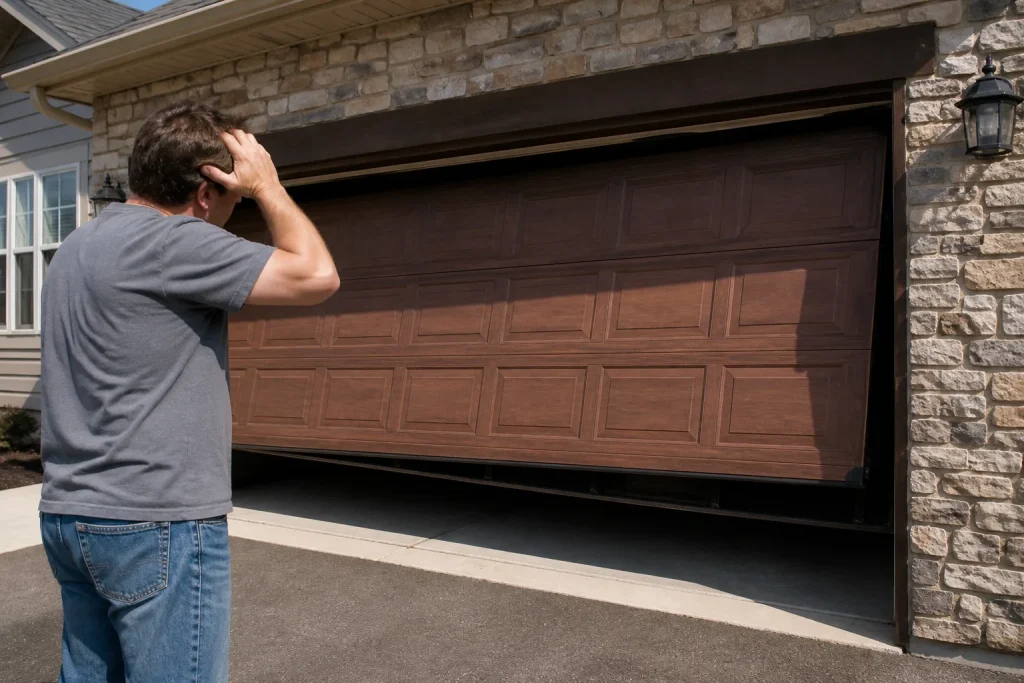
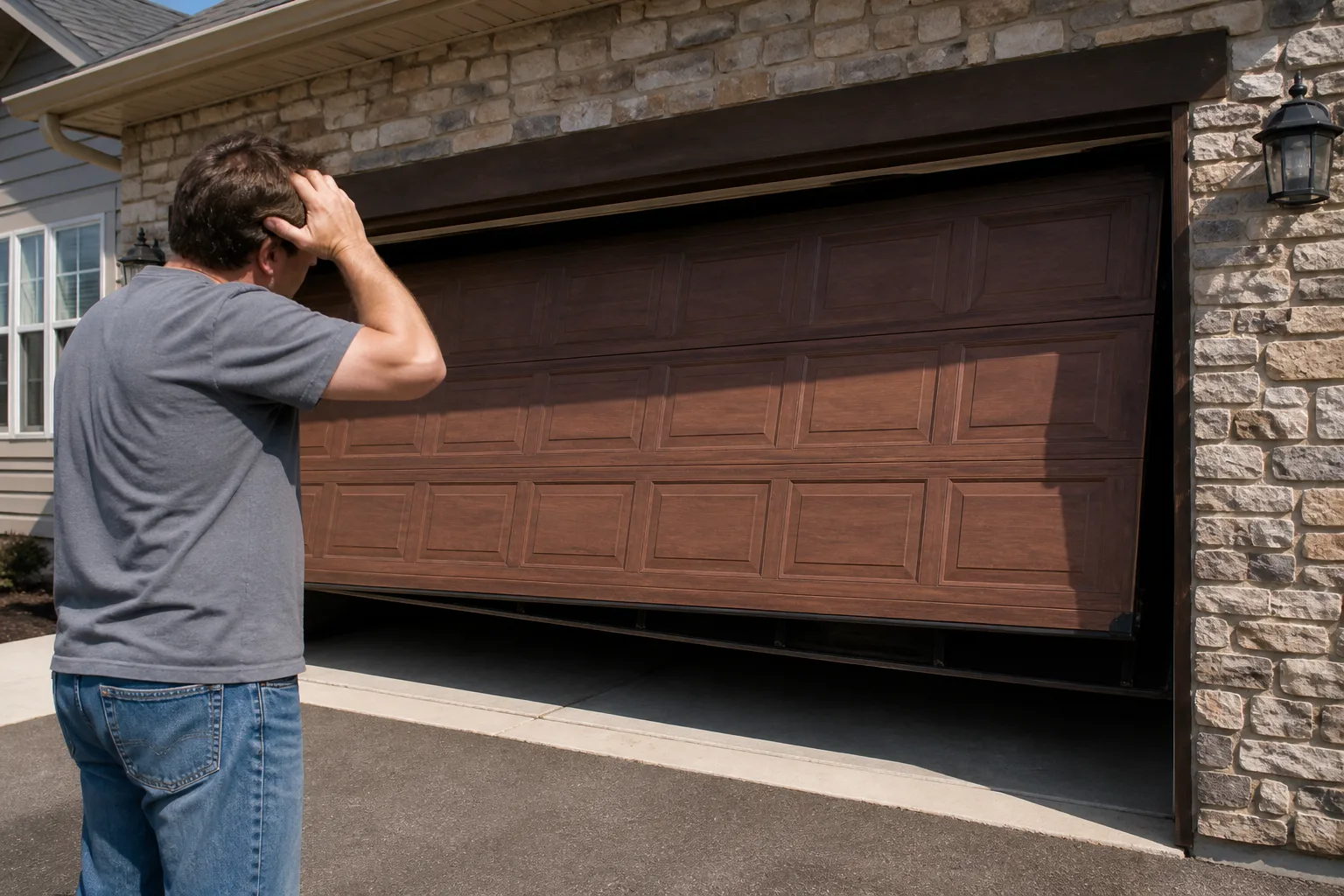
- The door hanging unevenly, with one side higher than the other.
- A door that won’t stay up when you try to raise it by hand.
- Any loud bang from the hardware followed by a door that won’t move.
These are schedule-this-week signs:
- New grinding, squeaking, or rattling during the cycle.
- A door that’s slower than it used to be.
- A bottom seal that’s torn or no longer touching the floor.
- The opener hesitating, straining, or reversing on its own.
- A remote or wall button that works only some of the time.
If the door won’t budge and you can’t secure the garage, that’s when emergency garage door service makes the difference. We treat emergency calls as a real service, not an upsell, because a door stuck open overnight is a security problem as much as a mechanical one.
When to Call a Pro
If you’ve done the floor-level visual check and found a broken spring, a loose cable, or a track that’s bent out of shape, that’s your signal to call. Springs and cables are the two parts we never want a homeowner touching, and they’re exactly the parts a trained technician is set up to replace safely. Our technicians have up to 11 years of experience, and we handle garage door repair across the major brands, including Clopay, Amarr, and Wayne Dalton, so your door isn’t a mystery when we arrive.
The opener side is its own skill set. If the door moves fine but the motor hums, the remote drops out, or a smart drive won’t connect, that’s garage door opener repair territory. We work on Genie, LiftMaster, Chamberlain, and Craftsman systems, old and new, so a legacy chain drive gets the same attention as a modern connected opener.
Related services in Lowell: spring repair, opener repair, full door replacement, and emergency service. One call covers the whole range, so you’re not bouncing between providers for a repair that turns into an install.
The Bottom Line
Most garage door failures are predictable. A slow door, a new grinding noise, a bottom seal that’s lost its grip, and a spring with a visible gap are all warnings that show up weeks before the door stops working. The earlier you act on them, the smaller the repair and the safer the door. Catching a spring losing tension early saves the opener. Catching a bent track early saves the panels. If you’re in Lowell and need help, Lowell Garage Door Repair Pros offers free estimates – call (833) 509-5209.
Frequently Asked Questions
The earliest signs are a door that’s slower than it used to be, new grinding or squeaking during the cycle, and a bottom seal that no longer touches the floor. A door that hesitates partway up is usually a spring losing tension, and that stress transfers to the opener if it’s left alone. Call (833) 509-5209 for a free estimate if any of these sound familiar.
A broken torsion spring usually shows a visible gap in the coil above the door, and often comes with a loud bang when it snaps. If you see a gap or the door won’t lift, stop using it and call for spring repair. Don’t try to raise the door by hand to test it. Call (833) 509-5209 and we’ll take a look.
Yes. When a spring loses tension, the opener motor has to lift weight it wasn’t sized for, draws more current, and runs hotter each cycle. Over a season or two that strain can burn out the motor or strip the gears. Fixing the spring early protects the opener. Call (833) 509-5209 for an estimate.
Grinding or squeaking means schedule a repair this week. A loud bang, a snapped cable, or a door hanging unevenly means stop using it until a technician arrives. When in doubt, don’t run it. Call (833) 509-5209 for a free estimate and we’ll help you sort out which it is.
Written by the team at Lowell Garage Door Repair Pros.
Need Garage Door Help?
Call Lowell Garage Door Repair Pros - the local pro we connect you with is licensed and insured, here with fast after-hours help in Lowell.
(833) 509-5209