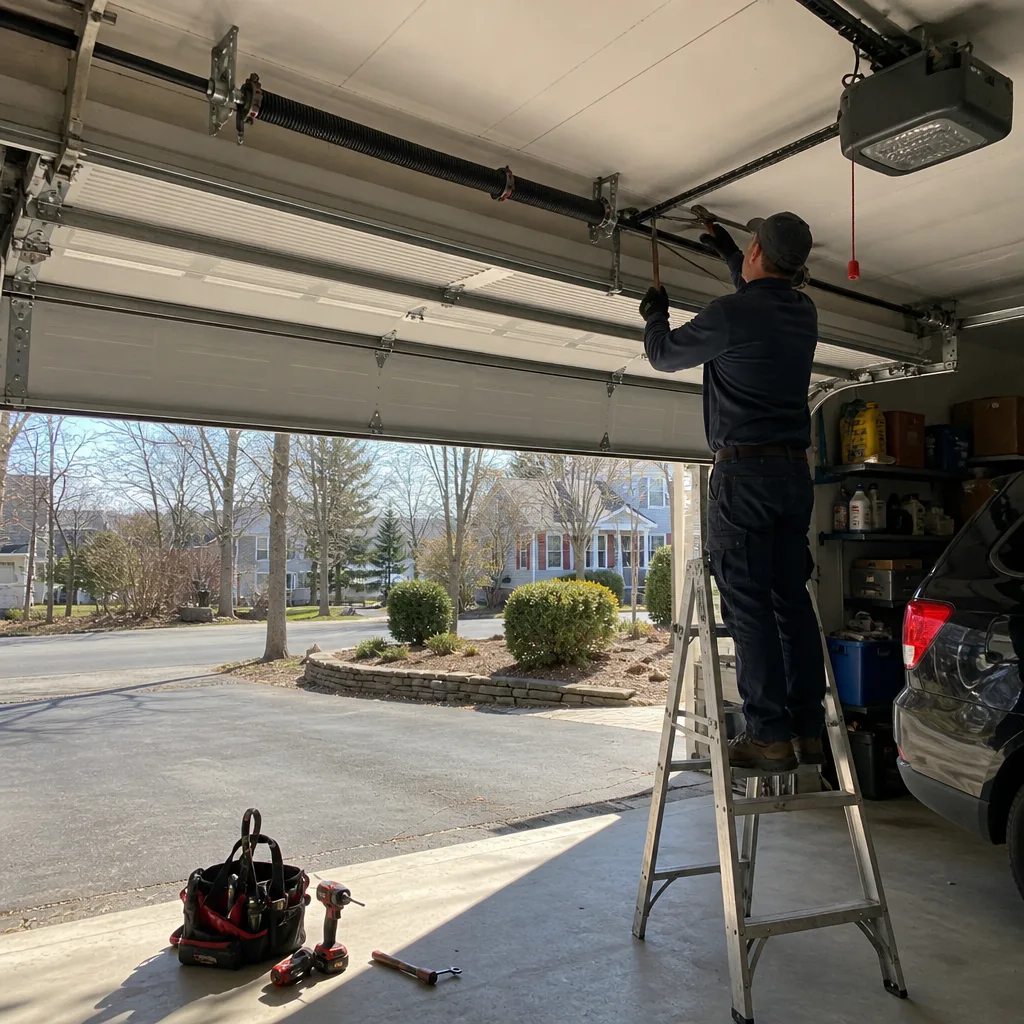
Last updated November 22, 2026
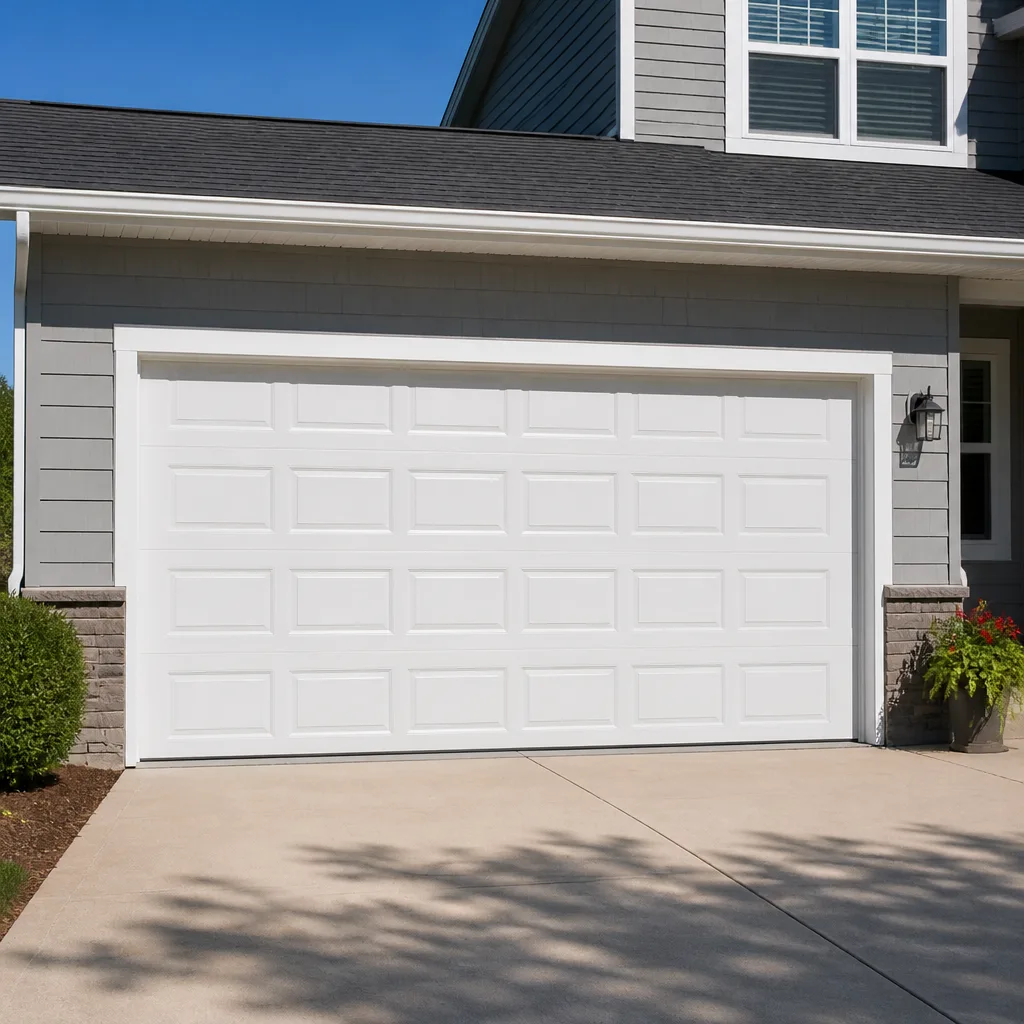 Raised-panel steel
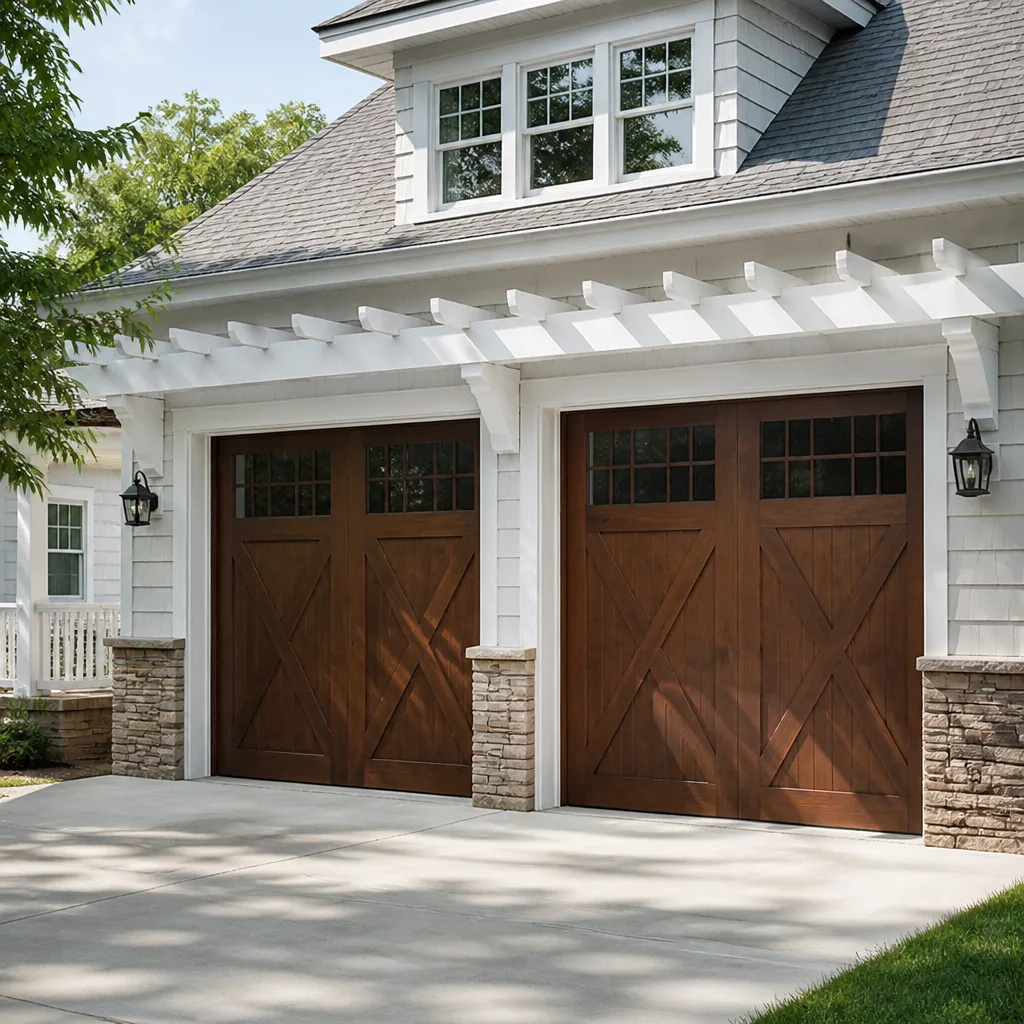 Carriage house
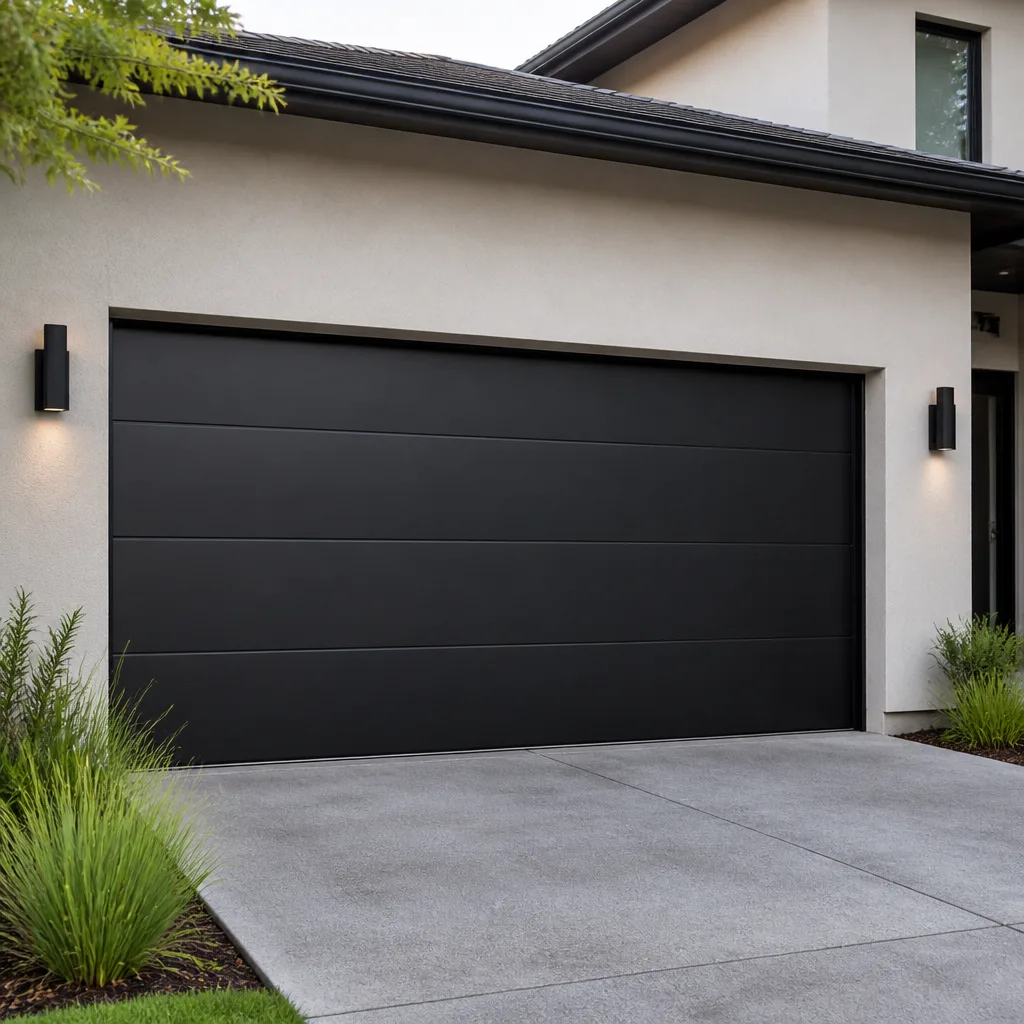 Modern flush
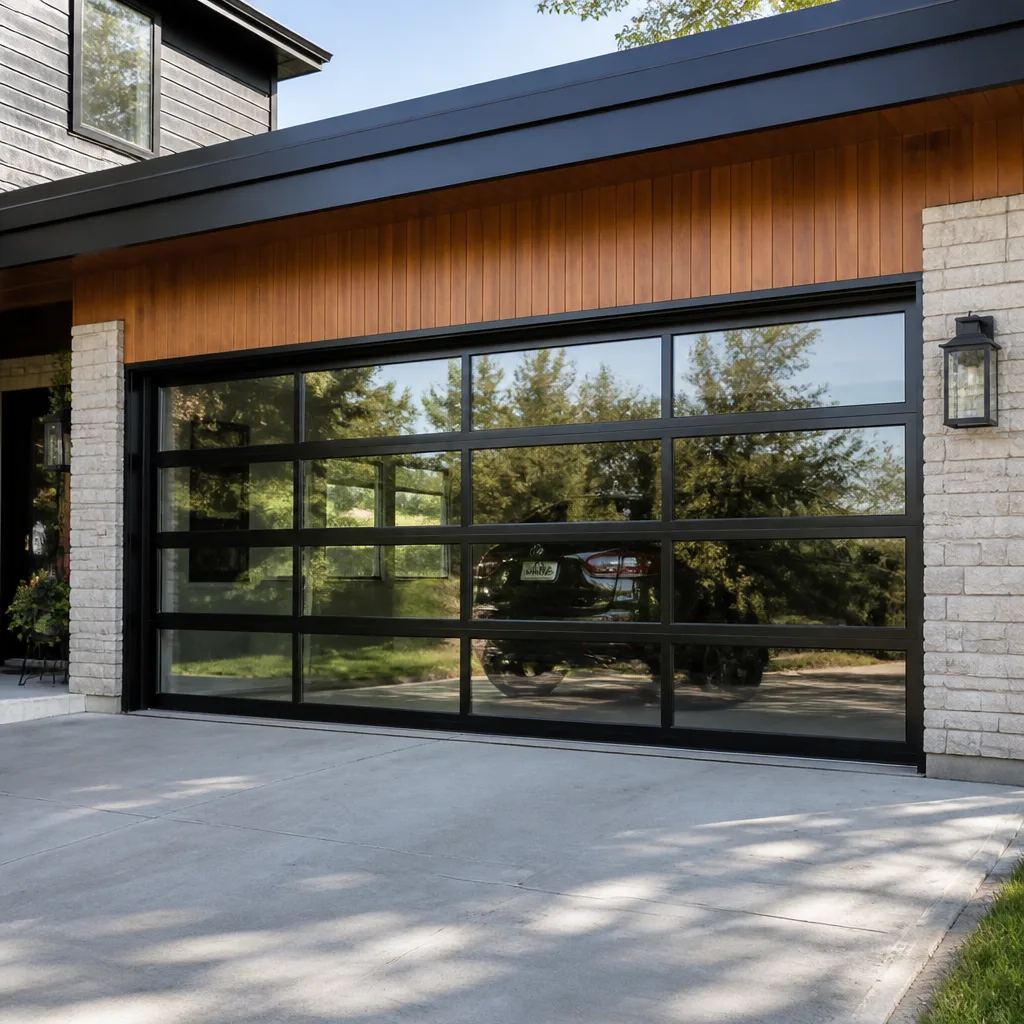 Full-view glass
 LiftMaster openers
 Chamberlain openers
Full 25-point door and opener safety check with every visit - springs, cables, rollers, tracks, and your LiftMaster or Chamberlain opener included
You get a price before we start. It does not change when the pro arrives.
Get your free estimateThe Complete Guide to Garage Doors in Lowell
Most Lowell homes with attached garages were built before modern torsion spring systems existed. That single fact explains more garage door trouble in this city than any other. The door hardware your neighbor swears by may be the wrong spec for your opening entirely, and a setup that works flawlessly two streets over can bind, sag, or fail early in your own garage. Lowell is a city of triple-deckers, mill conversions, and postwar ranches, and each one asks something different of a door and its hardware. This guide walks through how the city’s building age, lot constraints, and Merrimack Valley weather shape what fits, what lasts, and what to fix. By the end you’ll know how to read your own door, spot a panel job from a replacement, and ask the right questions before anyone touches a spring.
Quick Answer
Garage doors in Lowell need to be matched to the building, not picked from a catalog. A triple-decker’s low header and narrow rough opening, a mill conversion’s oversized bay, and a postwar ranch’s standard single-car opening all take different door types, spring setups, and weatherseals. Start by reading your door’s data plate for its model, size, and weight, then choose repair versus replacement based on whether the panels are sound and the opening is standard. When springs or hardware look worn, that’s a trained-technician job, not a weekend project.
Styles & brands we work with
- Raised-panel steel
- Carriage house
- Modern flush
- Full-view glass
- LiftMaster openers
- Chamberlain openers
Table of Contents
- How Lowell’s Housing Stock Shapes Your Garage Door
- Merrimack Valley Climate and Your Door Hardware
- Brand Availability and Lead Times in Lowell
- How to Read Your Door’s Data Plate
- Panel Replacement vs. Full Door Replacement
- Spring Systems: Why Spec Matters Here
- Openers for Old and New Homes Alike
- A Yearly Routine That Fits Lowell Weather
How Lowell’s Housing Stock Shapes Your Garage Door
Garage doors are built to fit a rough opening, and in Lowell that opening tells a story about when the house went up. The city’s triple-deckers, mill conversions, and postwar neighborhoods each produced a different relationship between the garage and the street, and each one narrows or widens what you can actually install.
Triple-deckers often came with small, detached or under-building garages squeezed onto tight lots. Headers run low, rough openings can be narrower than the modern standard, and headroom above the door is frequently limited. That low clearance rules out some high-lift and full-vertical-track setups and pushes you toward doors and spring systems designed for tighter spaces.
Mill conversions are the opposite problem. These buildings often have generous bays and tall openings that a standard residential door won’t properly fill. An oversized opening needs a door built to the actual dimensions, matched springs, and a track and header arrangement that handles the extra weight and travel.
Postwar ranches around the city tend to have the most predictable openings: a standard single or double bay with normal headroom. These are the easiest to fit with off-the-shelf door styles and the most forgiving for spring and opener upgrades.
- Triple-deckers: low headroom and narrow rough openings; favor low-clearance hardware.
- Mill conversions: oversized bays that need custom-sized doors and matched springs.
- Postwar ranches: standard openings that take common door sizes and upgrades easily.
Before anyone quotes a door, confirm the rough opening width, the headroom above the opening, and the side clearance. Those three measurements decide which doors physically fit your Lowell garage, and getting them wrong is the most common reason a replacement goes sideways.
Merrimack Valley Climate and Your Door Hardware
Lowell sits in the Merrimack Valley, where humid summers and hard freeze-thaw winters work on a garage door year-round. That cycle matters more than most national guides admit, because it decides which weatherstripping holds and which spring wire lasts.
In summer, warm humid air pushes against the seals at the bottom and sides of the door. Cheap or dried-out weatherstripping lets that moisture into the garage, where it condenses on tools, framing, and the door’s steel. In winter, meltwater from the car and the road freezes at the threshold, and a seal that’s already cracked will let ice work its way under the door. Over a few seasons that means a bottom seal that tears, a threshold that rusts, and a door that no longer closes tight.
The fix is to spec weatherstripping for the climate rather than the cheapest roll on the shelf. A flexible vinyl or rubber bottom seal with a good compression set handles freeze-thaw better than a stiff, brittle strip, and side and top seals need to stay pliable through both humid and cold months.
Springs feel the same cycle. Cold shrinks and stiffens steel; repeated heating and cooling stresses the wire, and a spring that’s undersized for the door’s weight will fatigue faster in this climate. That’s why spring wire gauge and cycle rating matter here: the right spring for a Lowell door is one rated to carry that specific door’s weight through many thousands of cycles, matched to the actual load rather than guessed at.
- Bottom seal: flexible rubber or vinyl that springs back after compression.
- Side and top seals: pliable material that stays supple in cold and humid air.
- Springs: wire gauge and cycle rating matched to the door’s real weight.
Get those three right and the door weathers the valley’s seasons far better than one sealed and sprung to a generic national standard.
Brand Availability and Lead Times in Lowell
Not every major brand is equally easy to get in Lowell, and knowing that before you shop saves weeks. Some manufacturers have strong distributor support in the Merrimack Valley and can supply common sizes quickly. Others, especially for custom or oversized doors, run longer lead times because the door is built to order.
In practice, the brands a Lowell homeowner is most likely to run into are the ones already installed across the city. LiftMaster and Chamberlain dominate openers, especially where a home has been updated for smart control. Older garages often carry a Craftsman or Genie opener that’s still going. On the door side, Clopay, Amarr, Wayne Dalton, and Raynor cover most of what’s on local houses, with Wayne Dalton common on tract and postwar homes.
The lead-time reality is straightforward: standard sizes in popular styles move faster, and anything custom, oversized, or in a less-common color or window configuration takes longer. For a mill conversion needing an oversized door, budget for that build time before the first cold snap, not after.
- Quick turnaround: common single and double sizes in popular door styles.
- Longer lead time: custom widths, oversized bays, unusual colors, and window layouts.
- Opener availability: LiftMaster, Chamberlain, Genie, and Craftsman parts are widely supported.
Whatever brand is on your door or opener, the work still has to be matched to your opening and your hardware. That’s where a specialist who handles many brands matters: you don’t want to hear that your brand isn’t covered. We work across LiftMaster, Chamberlain, Genie, Clopay, Amarr, Wayne Dalton, Craftsman, and Raynor, so the brand rarely decides whether a job is doable, only how it’s specced and sourced. If you’re weighing a fix against a new door, our garage door repair service starts with a look at what you already have.
How to Read Your Door’s Data Plate
Before you call anyone, find your door’s data plate. Most sectional doors carry a small manufacturer’s label, often on the inside face of a panel or the bottom section, and reading it tells you exactly what you have. That turns a vague phone call into a precise one.
The plate typically shows the manufacturer, the model, the door’s size, and sometimes the panel or section identification. That information lets a technician confirm the door type, order the right parts, and match springs to the door’s weight without guesswork.
- Locate the label. Check the inside face of each section and the bottom panel edge.
- Photo it. Take a clear, well-lit photo of the entire plate, not just part of it.
- Note the model and size. Write down manufacturer, model, and dimensions exactly as printed.
- Record the door type. Sectional, rolling, or tilt-up, and single or double bay.
- Measure if the plate is missing. Note opening width, height, and headroom for the technician.
If the plate is worn off or missing entirely, don’t guess. Measure the rough opening and the door’s thickness and note any brand markings on the hinges, track, or opener. A technician can identify the system from those details. Having this ready before the call is the fastest way to get an accurate estimate and the right parts on the first trip.
Panel Replacement vs. Full Door Replacement
One dented panel rarely means a new door. The decision between replacing panels and replacing the whole door comes down to the condition of the structure, the opening, and how the door was built. In Lowell, the house type usually points you toward one or the other.
Panel replacement makes sense when the door’s frame, track, and springs are sound and only a section or two is damaged. It’s the common path for postwar ranches with standard sectional doors, where a matching panel is easy to source and the rest of the system is healthy. It’s faster and less disruptive than a full swap.
Full replacement is the better call when the opening is non-standard, the door is worn across many sections, or the hardware is at the end of its life. Triple-deckers with tight, low-clearance openings and mill conversions with oversized bays often fall here, because the right long-term answer is a door built to the actual opening rather than patched together from mismatched parts.
- Panel replacement: isolated damage, sound frame and springs, standard sectional doors.
- Full replacement: oversized or non-standard openings, widespread wear, aging hardware.
- Watch for: a door whose panels are fine but whose springs and track are failing; sometimes the smarter spend is the full system.
This is where an opener question and a door question often arrive together, and they’re separate decisions. If the panels are good but the opener is struggling, that’s an opener fix, not a new door. Our garage door opener repair covers the electronic side while the door stays put. The point is to fix the part that’s actually failing.
Spring Systems: Why Spec Matters Here
Springs carry the door’s weight so you and your opener don’t have to. When one fails, the door gets dangerously heavy and stops behaving, which is why spring work is the most safety-critical task on a garage door. This is not a component to improvise.
Two systems show up in Lowell. Older and many triple-decker garages use extension springs that run along the horizontal tracks. Most newer doors and many replacements use torsion springs mounted on a shaft above the door. Each has its own hardware, its own failure modes, and its own correct replacement procedure.
The spec that matters is the spring matched to the door’s actual weight and the cycles it needs to deliver. Guessing at wire gauge, or swapping in whatever spring a store has on the shelf, shortens the spring’s life and stresses the opener. In a freeze-thaw climate, an undersized spring fatigues even faster, so getting the rating right up front is the difference between a repair that lasts and a repeat call next season.
We treat spring repair as its own specialty, because it is. High-tension springs and cables store serious energy, and a mistake can cause severe injury. A trained technician uses the right tools to safely release tension, matches the new spring to the door, and checks the balance and travel before calling the job done. Our garage door spring repair is built around doing that precisely, for extension and torsion systems alike. If a spring has snapped or the door suddenly feels heavy, stop using it and have it looked at before anything else.
Openers for Old and New Homes Alike
An opener is a separate system from the door, and it needs to match both the door’s weight and the owner’s expectations. In Lowell, that spans a wide range, from a decades-old Craftsman unit still doing its job to a newer LiftMaster or Chamberlain myQ setup tied into a smart home. Each needs a different kind of attention.
On a legacy opener, the usual issues are worn drive gears, tired remotes, failing safety sensors, and a motor working harder than it should because the door’s balance has drifted. On a smart opener, the same mechanical basics apply, plus connectivity: remotes that won’t pair, sensors knocked out of alignment, and an app that won’t talk to the unit. The diagnosis differs, but the principle is the same. The opener should lift a properly balanced door with little effort.
- Legacy units (Craftsman, Genie): check drive gears, remotes, safety sensors, and door balance.
- Smart units (LiftMaster, Chamberlain myQ): check pairing, sensor alignment, and connectivity.
- Both: confirm the opener’s lift rating matches the door’s weight and size.
If your opener is the problem rather than the door, that’s a targeted repair, not a reason to replace a healthy door. And if you’re starting fresh with a new door or opener, our Lowell Garage Door Repair Pros handles both sides of the system so you’re not juggling two companies. One call should cover the mechanical door and the electronic opener together.
A Yearly Routine That Fits Lowell Weather
A short maintenance pass each year catches most problems before they strand you. In Lowell’s climate, the two seasons that stress a door most are the transition into winter and the humid stretch of summer, so time your checks around those.
This is inspection and light care, not spring work. Leave anything involving high-tension springs or cables to a technician, and treat the checklist below as a way to spot issues early and describe them clearly when you call.
- Look at the seals. Check the bottom, side, and top weatherstripping for cracks, tears, or a door that doesn’t close tight.
- Listen to the door. A grinding, squealing, or banging noise signals worn rollers, hinges, or a balance problem.
- Test the balance. With the opener disconnected, a properly balanced door should lift easily and stay put partway up. If it drops or fights you, that’s a spring or balance issue for a technician.
- Clear the tracks. Wipe debris from the tracks and check that the door runs straight without binding.
- Check the opener. Confirm safety sensors are aligned and the reverse test works, and replace remote batteries as needed.
- Clear the threshold. Before freeze-up, make sure water drains away from the garage opening so ice doesn’t build at the seal.
Do this once heading into winter and once in early summer, and you’ll catch the small failures before they become a stuck door on a morning you need to leave. Anything involving the springs, cables, or the opener’s internal drive should go to a trained technician.
Common Mistakes to Avoid
- Ordering a door before measuring the opening. A Lowell triple-decker’s low header and narrow rough opening will reject a standard door that seemed right online. Measure width, height, and headroom first, or have it measured.
- Replacing one spring when both are worn. Matched springs share the load and wear together. Swapping just one stresses the other and shortens the life of both.
- Assuming every brand is equally available. Common sizes in popular styles move fast; custom and oversized doors take longer to build. For a mill conversion needing a large door, plan for that lead time before winter.
- Treating the opener as the whole system. If the door’s balance has drifted, a new opener just works harder. Fix the door’s balance and springs, then judge the opener.
- Ignoring worn weatherstripping through freeze-thaw. A cracked bottom seal lets meltwater freeze at the threshold and rust the door. Replace it before the cold sets in.
- Tackling springs or cables yourself. High-tension springs store dangerous energy. This is the one part of a garage door that genuinely requires a trained technician and the right tools.
- Skipping the data plate. Calling without your door’s model and size means a slower diagnosis and a less accurate estimate. A photo of the plate saves a trip.
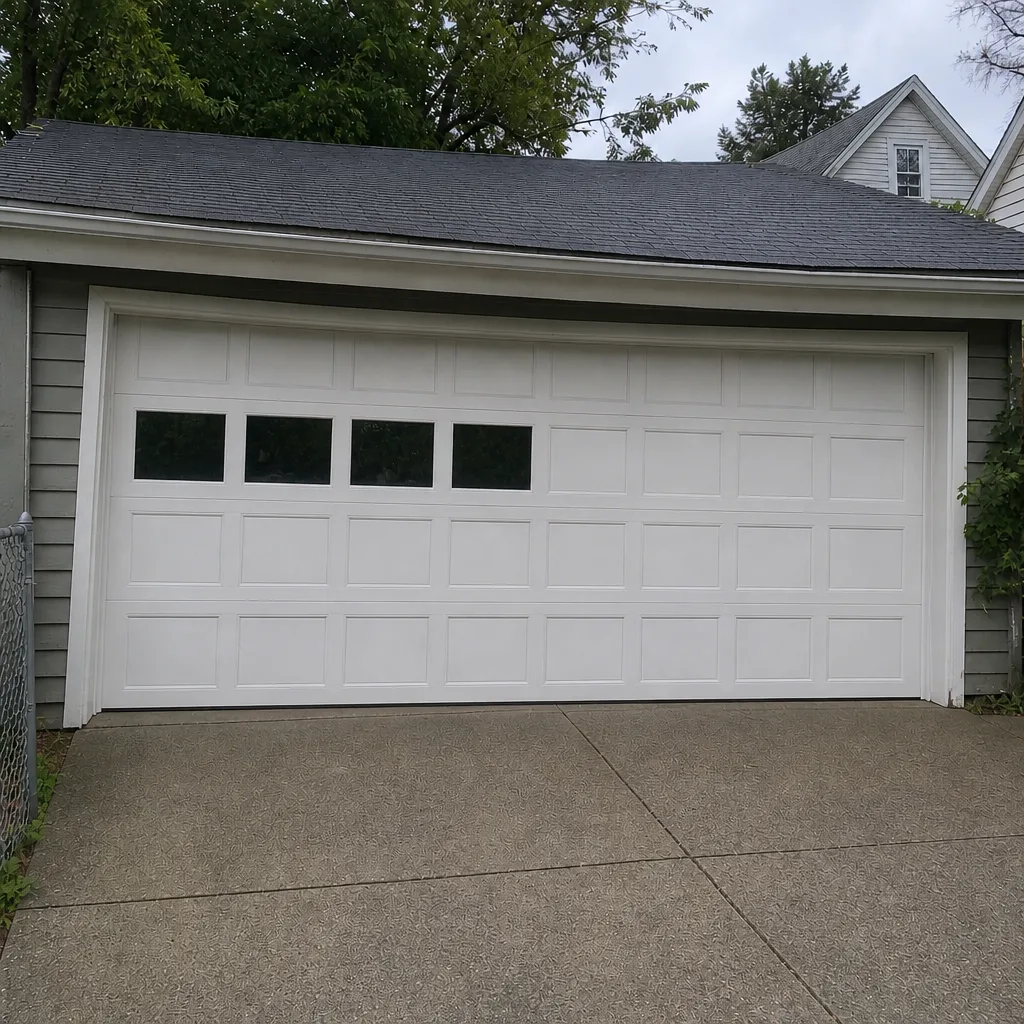
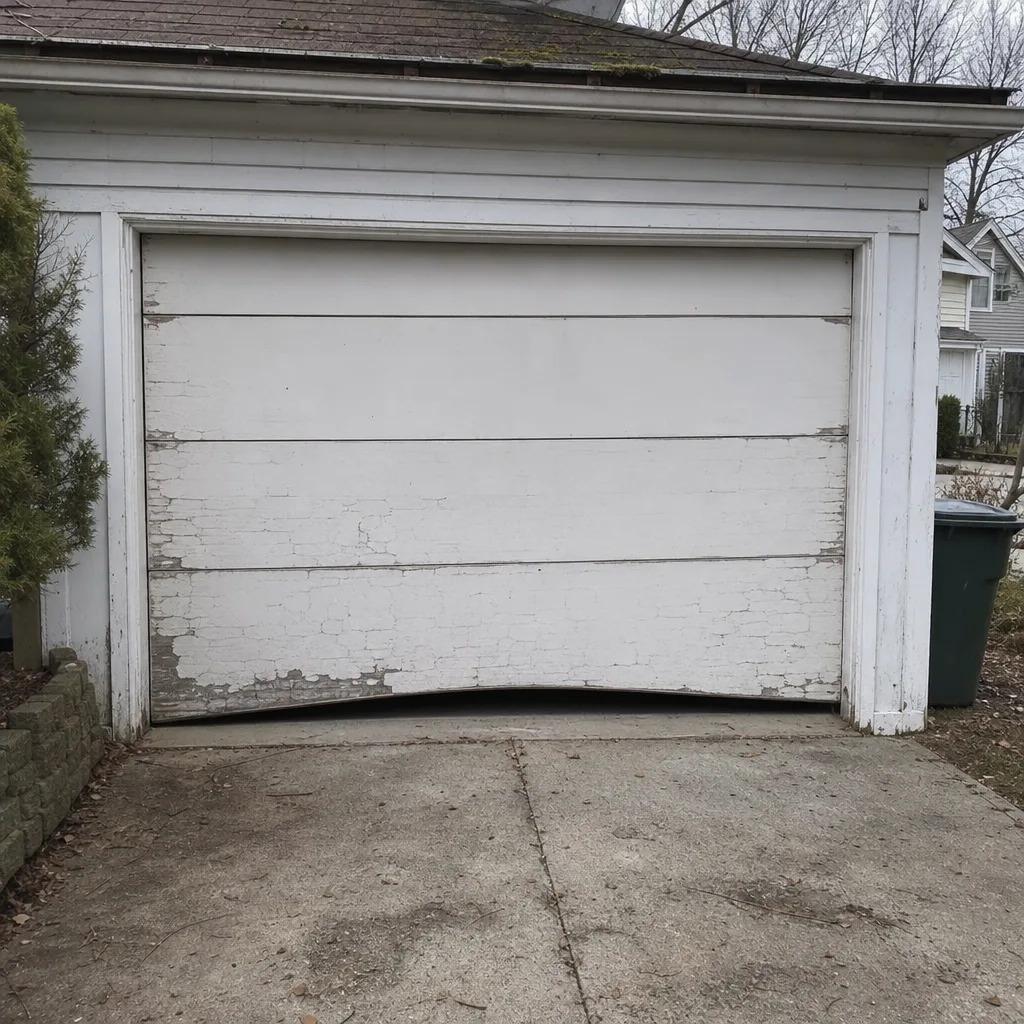
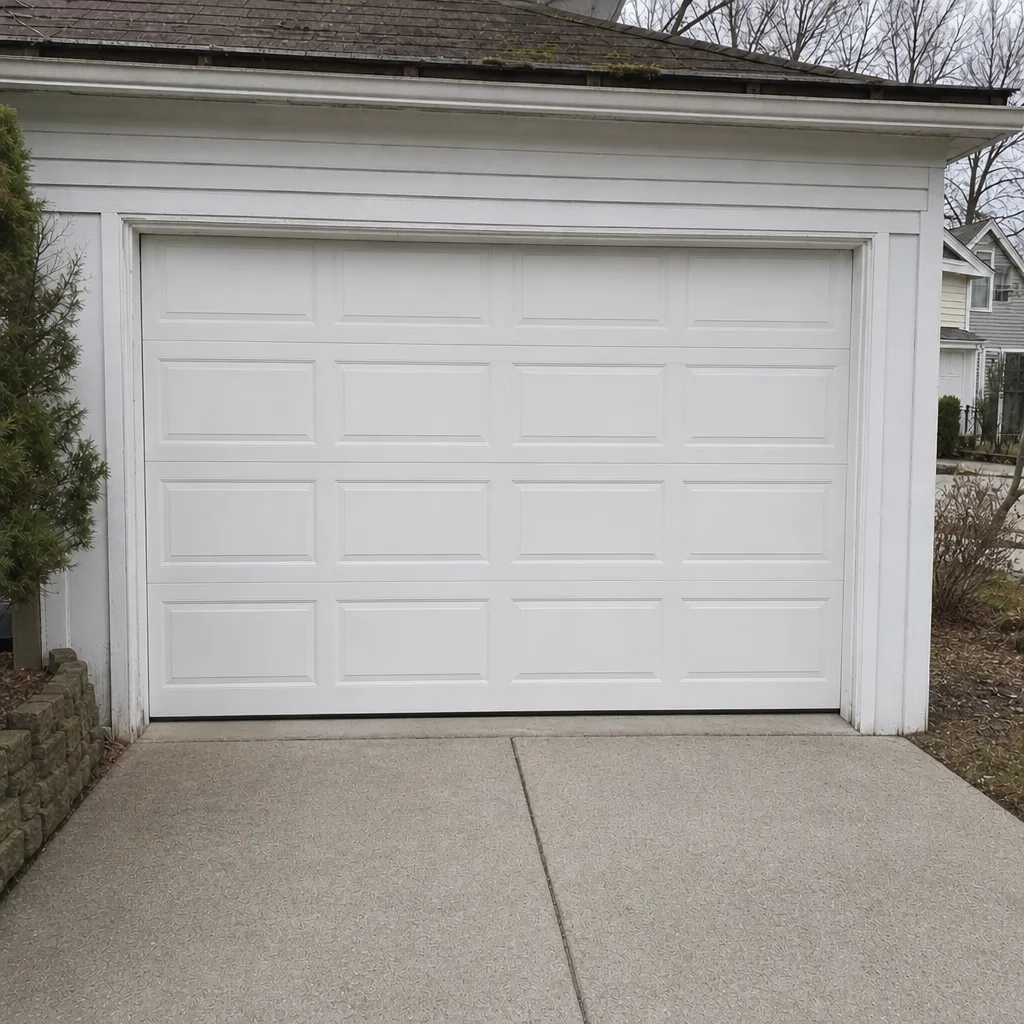
See the difference
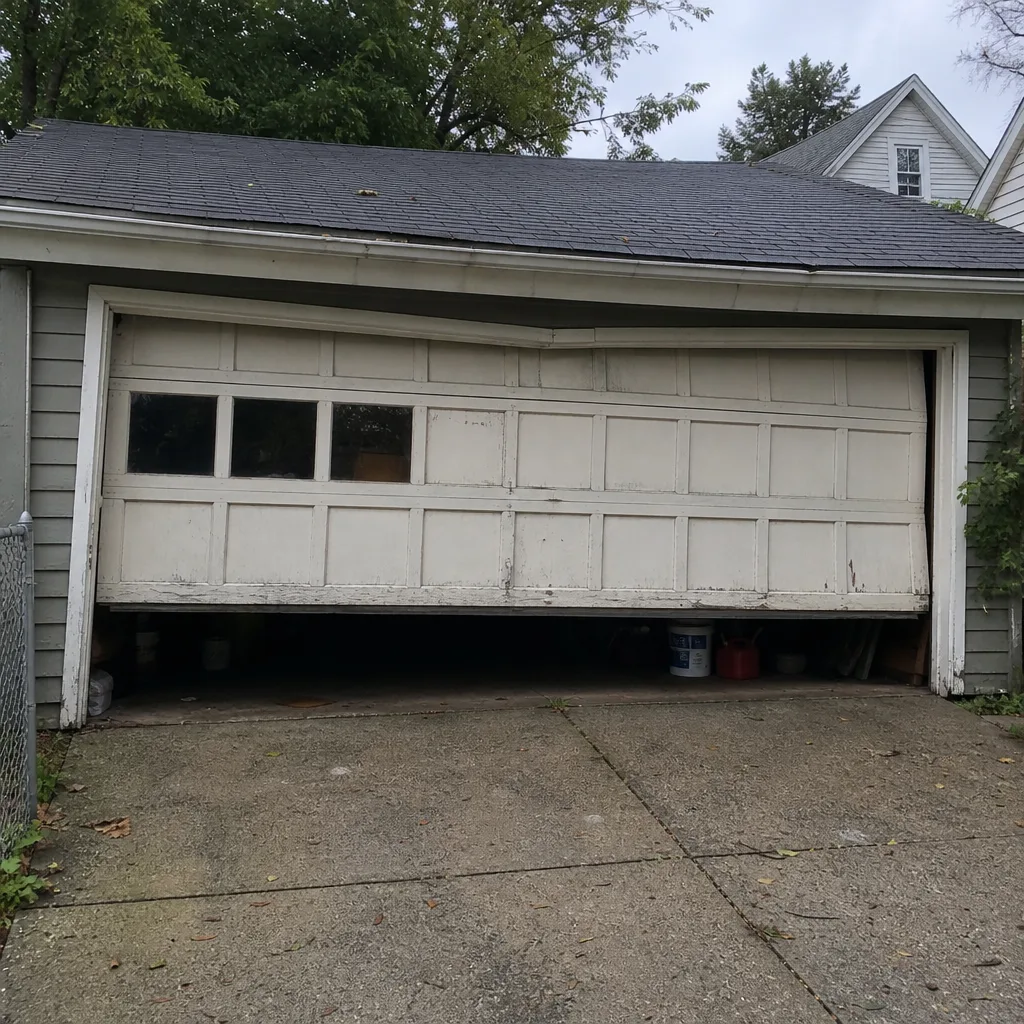 Before
 After
 Before
 After
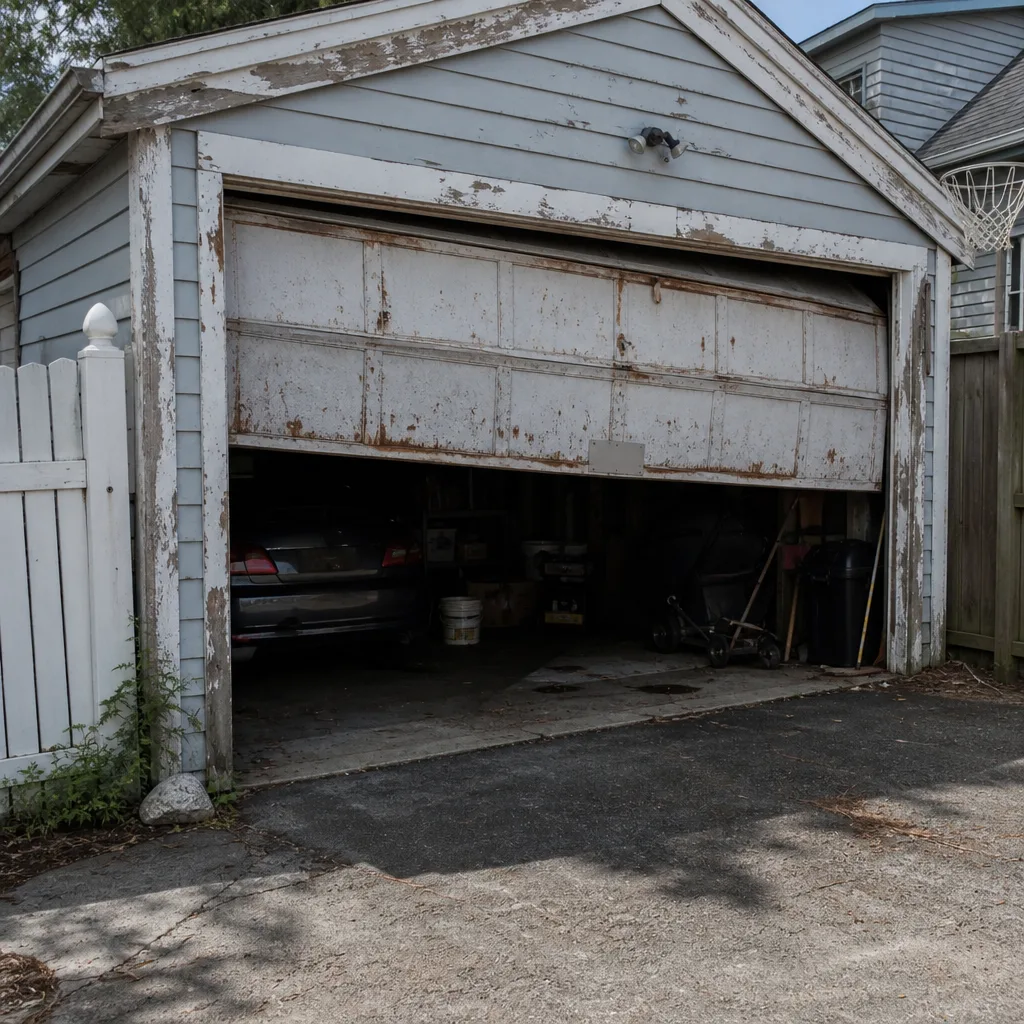 Before
 After
When to Call a Professional
Call a professional when a spring snaps or the door suddenly becomes heavy, when the door comes off its track or hangs crooked, or when the opener strains or stops lifting. Any of those is a safety issue, and the door shouldn’t be used until it’s checked. Call sooner if the door binds, runs loudly, or won’t close tight going into winter, because small balance and seal problems get worse in the cold. Weatherstripping and routine checks you can handle yourself; springs, cables, and opener internals you shouldn’t.
Lowell Garage Door Repair Pros offers free estimates in Lowell: call (833) 509-5209. We work across the door and the opener, repair or full installation, so one conversation covers what you actually need. If your door fails and you need it handled quickly, our emergency garage door service is a real offering, not an upsell.
Frequently Asked Questions
There’s no single number, because a repair ranges from a weatherseal replacement to a full spring and hardware job. The best way to know is a free estimate based on your door’s model and what’s actually failing. Read the data plate, describe the symptom, and get a written quote before work starts. Call (833) 509-5209 for a free estimate and an exact figure for your door.
Often, yes. Spring failures, off-track doors, and openers that quit are exactly what our emergency garage door service is for, so call (833) 509-5209 and tell us what’s happening. The sooner we know whether it’s the door or the opener, the faster we can help. We’re closed on Saturdays, so a door that fails on a Saturday gets booked for Sunday.
Your written estimate is the price for the agreed work, and anything that changes gets discussed and approved before it’s done. The point of reading your data plate and measuring the opening first is to keep the quote accurate from the start. Call (833) 509-5209 to get your estimate in writing.
Yes. The local professionals we connect you with are licensed and insured as their state requires, and our technicians have up to 11 years of experience. That matters most on spring and opener work, where the right tools and know-how keep the job safe. Call (833) 509-5209 to schedule.
Replace a panel when the damage is isolated and the frame, track, and springs are sound. Replace the whole door when the opening is non-standard or the door is worn across many sections. In Lowell, standard postwar ranches usually take a panel swap, while tight triple-decker openings and oversized mill-conversion bays often call for a full door built to the opening. Call (833) 509-5209 and we’ll tell you which one your door points to.
We work across eight widely installed brands: LiftMaster, Chamberlain, Genie, Clopay, Amarr, Wayne Dalton, Craftsman, and Raynor. That covers the openers and doors on most Lowell homes, from legacy Craftsman and Genie units to smart LiftMaster and Chamberlain myQ setups. If you’re unsure what you have, send a photo of the data plate. Call (833) 509-5209 for a free estimate.
The Bottom Line
Lowell’s garage doors are shaped by the buildings around them. Triple-deckers and mill conversions impose opening sizes and clearances that generic advice ignores, postwar ranches reward standard solutions, and the valley’s humid summers and hard freeze-thaw cycles put a premium on the right weatherstripping and correctly specced springs. Read your data plate, measure the opening, and know whether you’re facing a panel job or a full replacement before you spend. Springs and opener internals stay with a trained technician. Handle the small stuff yearly and the big stuff early, and your door will keep doing its job through every season. When you’re ready, Lowell Garage Door Repair Pros offers a free estimate and a written price before any work starts.
Call (833) 509-5209 today for a free estimate on repair, springs, an opener, or a full new door. Our technicians have up to 11 years of experience, we work across every major brand, and we’ll tell you plainly what your Lowell door needs.
Written by the team at Lowell Garage Door Repair Pros.