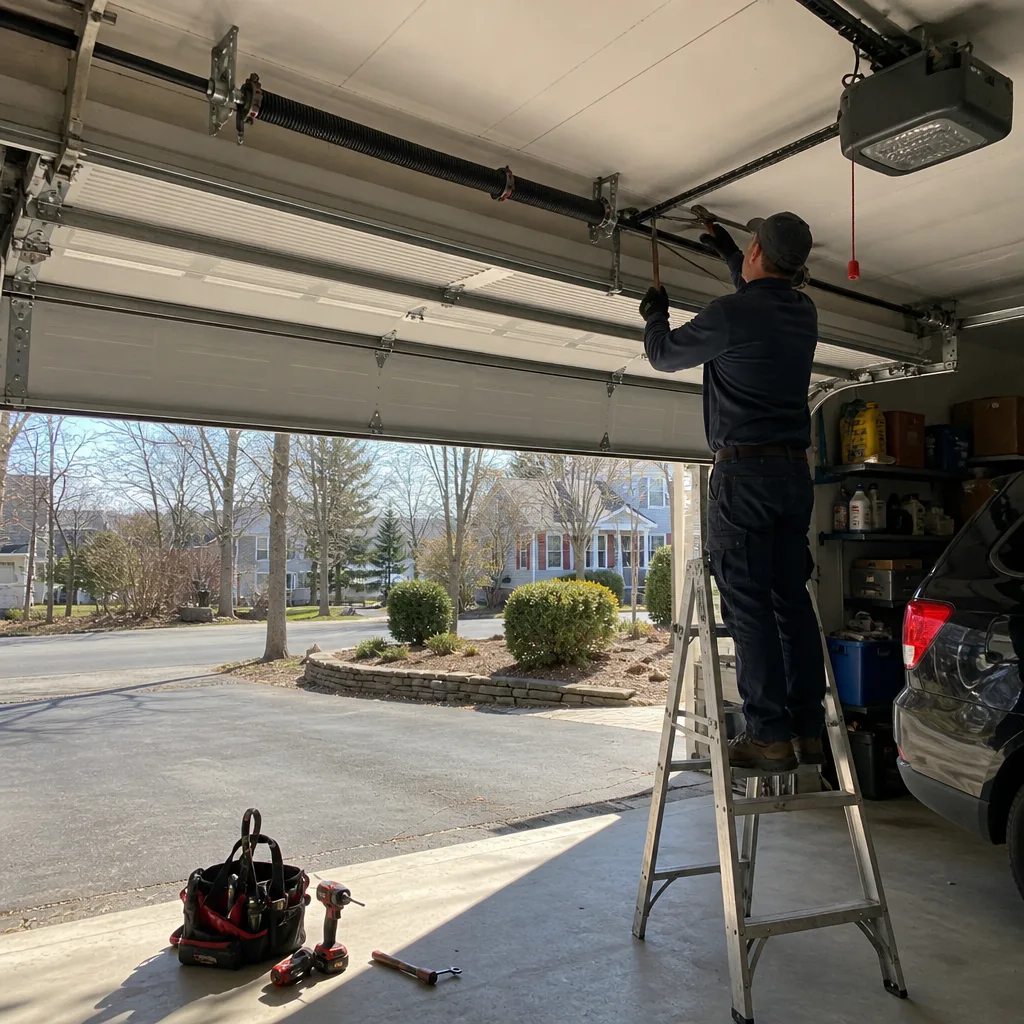
Last updated November 22, 2026
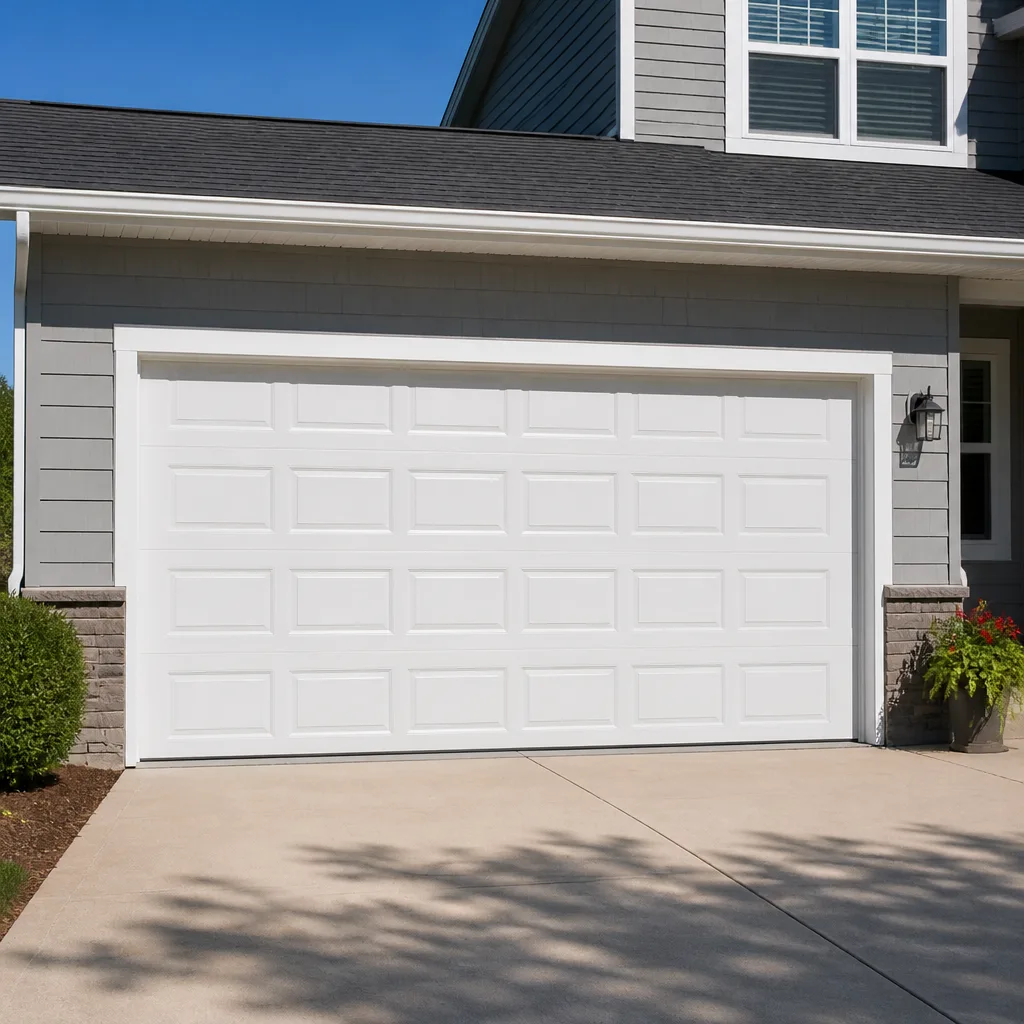 Raised-panel steel
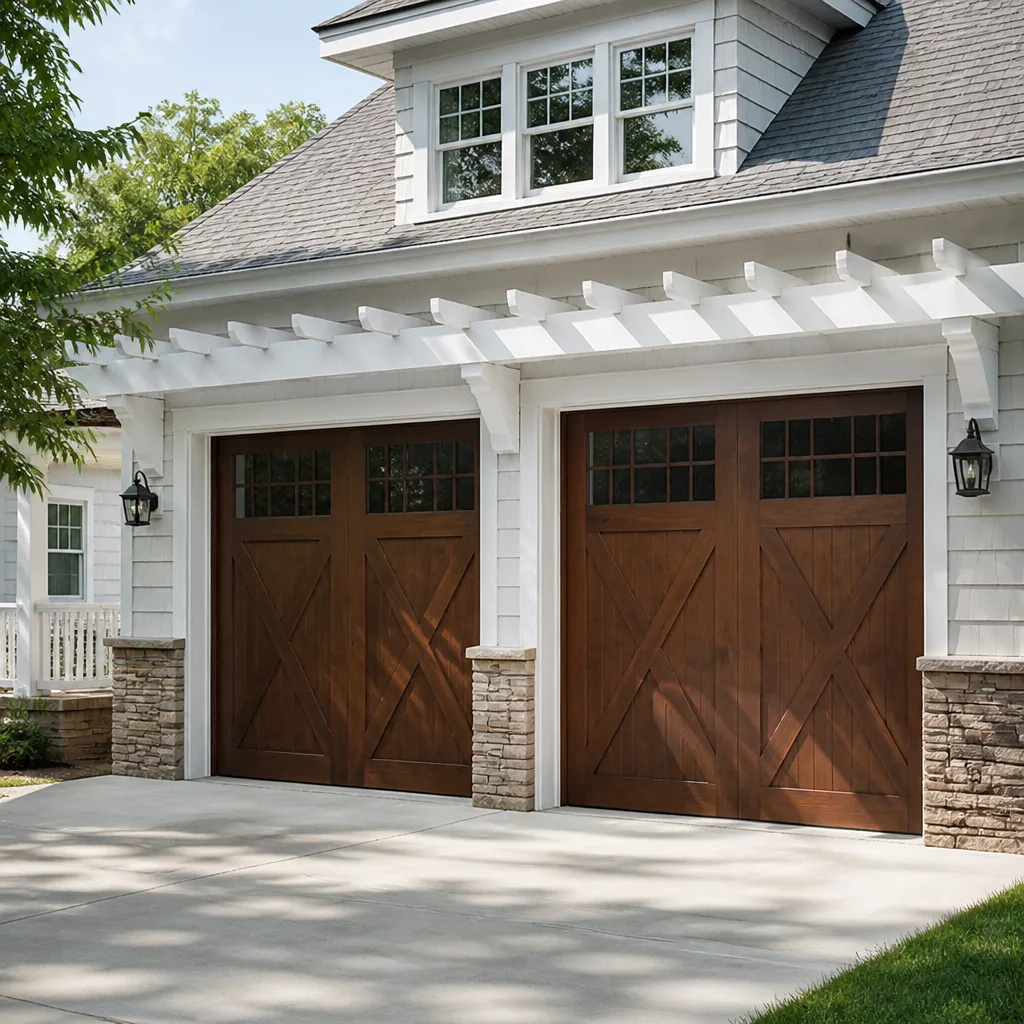 Carriage house
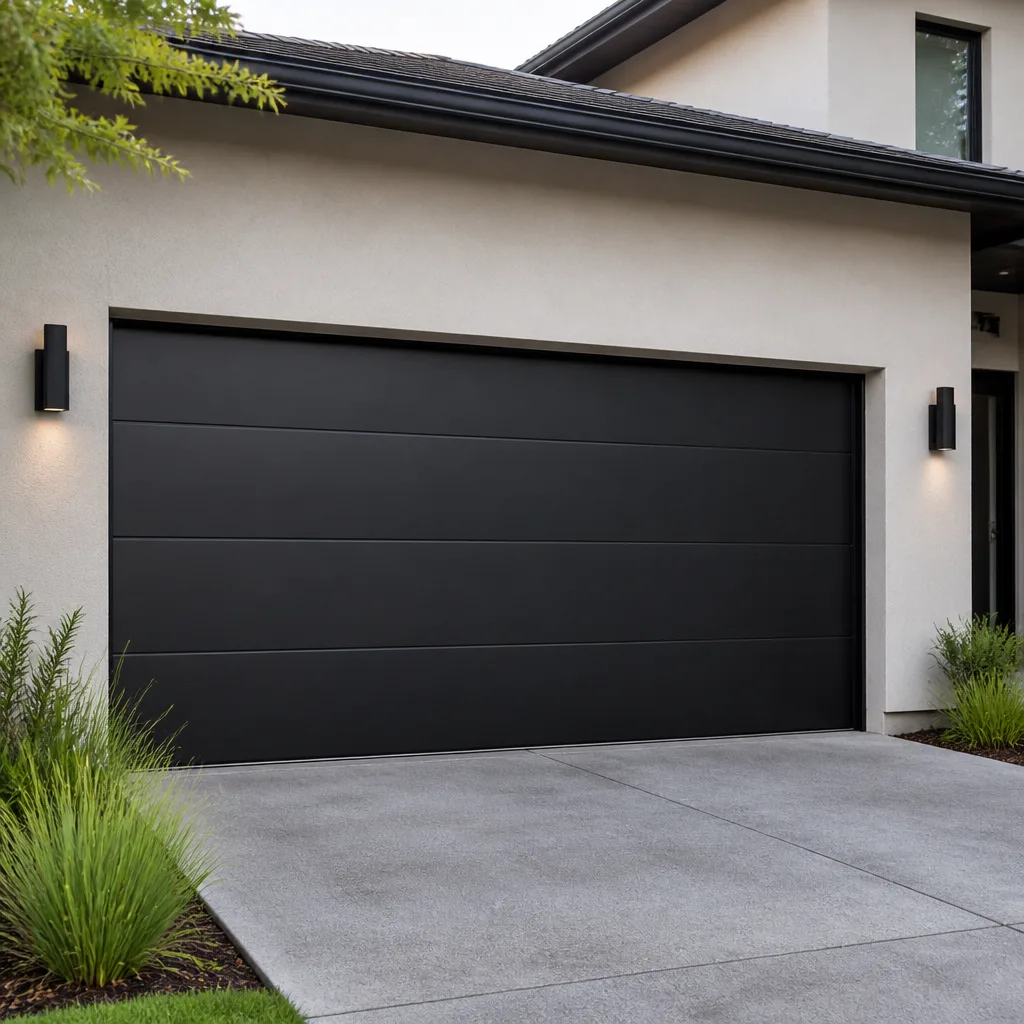 Modern flush
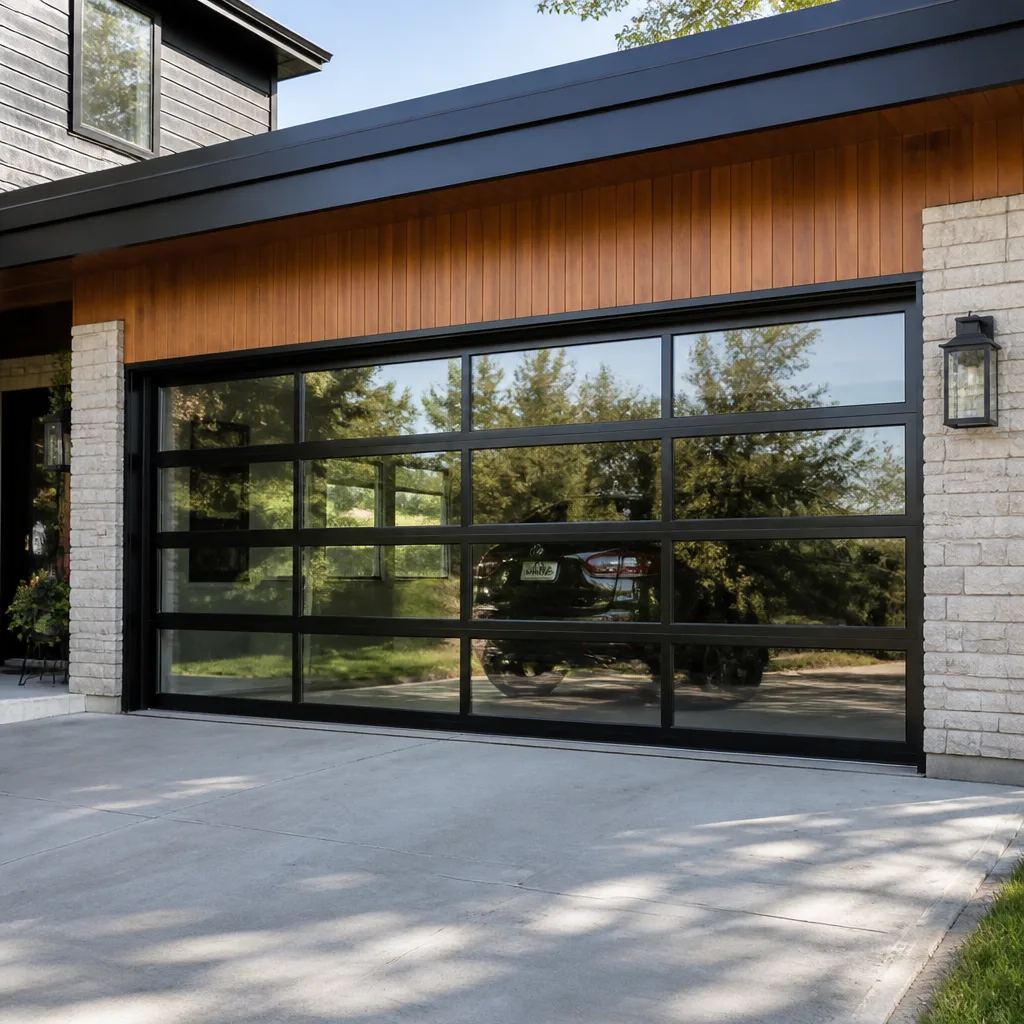 Full-view glass
 LiftMaster openers
 Chamberlain openers
Full 25-point door and opener safety check with every visit - springs, cables, rollers, tracks, and your LiftMaster or Chamberlain opener included
You get a price before we start. It does not change when the pro arrives.
Get your free estimateDIY vs Professional Garage Door: The Lowell Homeowner’s Decision Guide
“Garage door work” is not one thing. Replacing a torsion spring stores enough energy under tension to cause a serious injury. Replacing a roller does not. Treating those two jobs as the same category is the error that sends people to urgent care with hand and wrist injuries, and it’s also the error that keeps capable homeowners from doing the low-risk maintenance they could genuinely handle. This guide draws a hard line between the two: a yes/no task list, the specific physics behind spring danger, what a DIY panel job costs to undo when it goes wrong, what you can and can’t buy over the counter around Lowell, and how to brief a contractor if you’ve already started a repair and stopped.
Quick Answer
Homeowners can safely handle rollers, weatherstripping, photo-eye alignment, remote and keypad programming, lubrication, and visual inspections. Everything involving torsion or extension springs, cables, bottom brackets, panel replacement, track realignment, and opener drive-train or high-voltage electrical work belongs with a trained technician. The dividing line isn’t confidence or YouTube familiarity. It’s stored mechanical energy and the consequence of getting it wrong.
Styles & brands we work with
- Raised-panel steel
- Carriage house
- Modern flush
- Full-view glass
- LiftMaster openers
- Chamberlain openers
Table of Contents
- What “DIY garage door repair” actually means in Lowell
- Why torsion spring work is dangerous regardless of skill
- The safe-DIY list: tasks you can do yourself
- The professional-only list: tasks that carry real consequences
- Cost of a DIY mistake versus the professional rate avoided
- Tool and parts sourcing reality in Lowell
- How to brief a contractor after a partial repair attempt
- Lowell weather and the maintenance calendar that matters
What “DIY garage door repair” actually means in Lowell
The phrase covers everything from a five-minute photo-eye reset to pulling a torsion shaft out of a set of end plates. Much of the confusion comes from search results that mix those jobs together under the same heading, because the words match even though the risk doesn’t. A homeowner in Pawtucketville with a misaligned safety sensor and a homeowner in Belvidere with a snapped spring are both “doing garage door repair,” but only one of them is standing in front of stored energy measured in hundreds of foot-pounds.
The practical approach is to sort jobs by three questions before you touch anything:
- Does the task involve the spring, cable, or bottom bracket assembly? If yes, stop. That’s professional territory.
- Does the task require lifting, tilting, or removing a door panel? Also professional, because panel weight and spring counterbalance are linked systems.
- Does the task involve opening the opener housing or touching line voltage? Professional, for reasons that range from gear replacement to electrical safety.
If the answer to all three is no, it’s very likely something a prepared homeowner can do with basic hand tools. That includes swapping rollers, replacing bottom weather seal, cleaning and realigning the photo-eye, programming a new remote, adjusting the opener’s travel limits through the wall console, and lubricating hinges, rollers, and the torsion shaft bearings on a door that’s already in good working order.
Lowell homes span a wide age range, from early-1900s two-families in the Acre and Lower Highlands to newer construction out toward the city’s edges. Older doors often carry original hardware that has been patched over decades, and that’s exactly the kind of setup where a homeowner gets partway into a task and finds something unexpected. If you’re not sure what you’re looking at, that’s the moment to call rather than guess. Our Lowell Garage Door Repair Pros team handles both repair and installation across the brands most common in the city, and we can tell you over the phone whether a job is safe to attempt yourself.
Why torsion spring work is dangerous regardless of skill
A torsion spring on a typical residential door is wound to somewhere between seven and ten full turns, depending on door height and spring wire size. That winding stores the energy required to lift a door that might weigh between 130 and 300 pounds, and that energy is present whether the door is open, closed, or halfway. The spring doesn’t care how many videos you’ve watched. It only cares that the winding bars are seated correctly in the cones and that the set screws are properly torqued when you release tension.
The most common DIY injury in this category happens when a winding bar slips out of a cone under tension. A bar that kicks out of the cone can travel several feet in an uncontrolled direction, and a hand or wrist in the way takes the impact. The second most common injury comes from a door with a broken spring being lifted manually to inspect or clear it. With the spring failed, the door’s weight is no longer counterbalanced, and a panel edge or bottom bracket can come down on fingers or feet in an instant.
Extension springs, common on older Lowell doors, carry a different failure mode: when they break, they release stored energy along a horizontal path. That’s why a proper extension-spring replacement includes a safety containment cable running through the center of the spring, a detail many DIY installs miss entirely. Federal safety guidance has recommended containment cables on extension springs for decades; if your door doesn’t have them, that’s a sign the hardware hasn’t been updated.
This is why spring replacement is its own named service for us rather than a bundled line item. Our technicians have up to 11 years of experience with torsion and extension springs, and they work with the specific tooling that keeps the job controlled from first wind to final set screw. If you want to understand the scope of that work without attempting it, our garage door spring repair page walks through what a proper replacement involves. The short version is that this is not a task where a homeowner errs on the side of caution; it’s a task where the margin for error is measured in seconds.
The safe-DIY list: tasks you can do yourself
These are the jobs we’d tell a neighbor to handle themselves. They’re low-risk, they use tools most households already own, and none of them involve stored energy in the spring assembly or line voltage in the opener.
- Replace worn rollers. Nylon rollers wear and become noisy or wobbly. With the door fully closed and the opener disconnected, each roller slides out of its hinge and a new one goes in. Fresh rollers quiet most doors noticeably.
- Replace bottom weather seal. The rubber seal at the door’s bottom edge dries out and cracks. New seal slides into the retainer channel from the end. This is one of the most useful things a Lowell homeowner can do before winter.
- Realign the safety photo-eye. If the door reverses on its own or won’t close, the photo-eye is usually the culprit. Wipe the lenses, check that both LEDs are solid, and confirm the two eyes are aimed at each other about six inches off the floor.
- Program a remote or keypad. Every opener from Craftsman to LiftMaster and Chamberlain to Raynor has a pairing procedure in the manual or on the opener’s learn button. This is a five-minute job with no risk.
- Lubricate moving parts. Hinges, roller stems, and the torsion shaft bearings take a light coat of white lithium grease once a year. This cuts noise and slows wear.
- Adjust opener travel limits. If the door doesn’t quite close all the way or reverses before fully opening, the travel settings on the wall console can be nudged in small increments.
- Visual inspection. With a flashlight, look at cables for fraying, springs for gaps or rust, and the door for sagging panels. Any of those findings means stop and call.
If something on that list leads you to a problem you can’t safely address on your own, that’s a normal stopping point. The next section explains what belongs on the other side of the line.
The professional-only list: tasks that carry real consequences
Everything below involves either stored mechanical energy, structural weight, or electrical risk. None of it is a judgment call.
- Torsion and extension spring replacement or adjustment. Winding, unwinding, and setting spring tension all involve stored energy and require specific winding bars and tooling.
- Cable replacement. Cables are under tension from the springs and are the most common source of serious lacerations on garage doors. A snapping cable is genuinely dangerous.
- Bottom bracket and end plate work. These are the anchor points the springs and cables load against. A failure here can release the full door load instantly.
- Panel replacement. Door panels are heavier than they look and are counterbalanced by the spring assembly. Replacing a section without adjusting tension can overload hardware on either end.
- Track realignment. A bent or misaligned vertical track is a structural issue. Straightening without proper gauges can lead to a door that runs off its tracks.
- Opener gear, drive, capacitor, or logic board replacement. The opener housing contains a capacitor that holds charge and mechanical components under tension. Manufacturer procedures matter here, especially on LiftMaster and Chamberlain units with belt or chain drive.
- Any full installation or door replacement. New doors need correct spring sizing, headroom measurement, and track alignment.
For the electronic side, we cover the opener brands in residential use across the city, including Craftsman, Chamberlain, Genie, LiftMaster, and Raynor. Our garage door opener repair page covers what each diagnosis typically involves. If you’re hearing a grinding sound from the opener housing or the door won’t move at all, that’s a call-now situation rather than a weekend project.
Cost of a DIY mistake versus the professional rate avoided
The honest way to think about DIY risk is to compare the professional cost you skip against the repair cost if the job goes wrong. Here’s how that math plays out for a few common tasks in the Lowell market. These are typical ranges and estimates only; the written quote you receive sets the final price for any job.
| Task | Professional estimate | Typical cost if DIY goes wrong | Verdict |
|---|---|---|---|
| Roller swap (all rollers) | Low, $80 to $180 | A cracked hinge or mis-seated roller: minor | DIY reasonable |
| Bottom weather seal | $100 to $220 | Damaged retainer channel: near the pro cost | DIY reasonable |
| Torsion spring, single | $180 to $340 | Potential injury plus door or opener damage | Pro only |
| Torsion spring, matched pair | $360 to $680 | Same as above, plus opener strain | Pro only |
| Panel replacement (one section) | $250 to $600 | Door off-track or spring overloaded: hundreds more | Pro only |
| Track realignment | $150 to $300 | Door off-track and potentially unusable: full re-track | Pro only |
| Opener board or gear replacement | $180 to $400 | Shorted board or voided opener: full unit replacement | Pro only |
Two rows stand out. Springs are worth professional replacement in strict cost terms because the repair after a failed DIY attempt typically costs more than the original job, and that’s before any medical expense. Panels and tracks are worse: a door that comes off its tracks becomes unsafe to operate and often requires both new panels and new hardware, so a mistake on a $250 replacement can turn into a $900 repair.
One rule above all: the price you’ll pay is quoted and agreed before any work starts. If you’ve been told one price and handed an invoice with another, that’s a problem. Any reputable provider should be willing to put the estimate in writing.
Tool and parts sourcing reality in Lowell
The parts and tools you can actually buy in the city limit what’s realistically DIY. In practical terms:
- Available at general hardware in Lowell: nylon rollers, hinge hardware for standard residential sizes, bottom weather seal in common widths, white lithium grease, photo-eye brackets, standard remote controls.
- Usually trade-only: torsion springs sized to your specific door height and weight, winding bars rated for the spring wire gauge, safety containment cables for extension springs, bottom brackets and end plates, hinge and roller carrier assemblies for commercial-grade or older doors.
- Dealer-pairing required: many newer openers from LiftMaster and Chamberlain need a matching remote or keypad that pairs to your specific unit. A generic remote usually won’t work, and the pairing process varies by logic board generation.
The torsion spring is the key example. If you walk into a hardware store and ask for the spring on a standard 7-foot door, you may be handed something close, but a spring has to match door weight and height specifically, not approximately. A spring with the wrong wire gauge will fail prematurely or overpower the door and strain the opener. Trade suppliers stock this properly because they sell to technicians who need an exact match every time. That’s why our spring service is by measurement, not by guess.
One more source of friction: Lowell’s housing stock. Two-families from the early 1900s sometimes have nonstandard garage openings or doors that were retrofitted later. Parts that fit a modern installation may simply not be carried locally in the size the older door needs, which is another reason to know the door’s dimensions before buying anything.
How to brief a contractor after a partial repair attempt
If you’ve already started a repair and stopped, tell the technician exactly what you did. This isn’t a confession – it’s the fastest way to get accurate diagnosis. When we arrive on a door that’s been partially worked on, the first thing we do is figure out the current state without assuming it’s the original state.
Here’s what to mention on the call, in order:
- The original symptom. What the door was doing before you touched it: noise, intermittent reversal, misalignment, complete failure.
- What you did. Which parts you removed, replaced, loosened, or adjusted, and with what tools.
- What changed after your work. New sounds, door weight change, door reversing on close, opener error codes.
- Pieces you set aside or couldn’t reinstall. Keep them in a bag or on the garage floor. Even a suspected worn bearing tells us something.
- Whether the door is currently operative or off its tracks. This determines whether it’s safe to raise at all and whether you might need emergency service.
That brief gives the technician a starting point instead of the standard diagnostic ladder. In the Lowell market, where many older doors have had at least one previous repair, a partial-attempt history is common enough that we’ve built our intake around it. If the door is currently stuck in the open or closed position and creating a security or access problem, we offer dedicated emergency service for exactly those situations. For anything less urgent, a scheduled visit is the right call. Homeowners who want the full scope of what we cover can visit our garage door repair page, and callers can reach us at (833) 509-5209.
Lowell weather and the maintenance calendar that matters
Lowell’s winters are the reason to keep up with the safe-DIY list. Cold drives rubber weather seal brittle and cracking, and freeze-thaw cycles work on the bottom seal and on the door’s panel joints. The typical timeline for hardware failure in this climate looks like this:
- Early fall: check the bottom weather seal. Cracks that look cosmetic in October become leaks and drafts by January.
- Late fall: lubricate hinges, rollers, and torsion shaft bearings so cold-weather operation doesn’t grind down moving parts. Stiff grease from prior years should be wiped and replaced.
- Mid-winter: watch for uneven operation. A spring that’s starting to weaken feels different in cold weather, and the opener may strain to lift a door it handled fine in summer.
- Spring: inspect the bottom seal again after the freeze cycle ends. Look under the door for daylight, which is a sign the seal has compressed or cracked.
One maintenance item that catches Lowell homeowners off-guard: the photo-eye can get dirty or misaligned when a snowbank pushes the door or the sensor bracket. That’s a five-minute reset that rarely requires a service call once a homeowner knows what to look for. The maintenance items that do require a technician are spring inspection and cable inspection – those look simple until you realize a cable with visible fraying is close to failure.
Common Mistakes to Avoid
- Treating a spring job as a “learn it on YouTube” project. Confidence has nothing to do with the stored energy in a torsion spring. Even experienced technicians use proper winding bars and controlled release procedures, which exist because the failure mode is real.
- Lifting a door with a broken spring to inspect it. With the spring failed, the door’s full weight is on the panels and hinges. This is one of the leading causes of hand and finger injuries in the garage.
- Buying a spring by “looks about right”. Springs are sized to door weight and height, not to what fits in the bracket. A mismatched spring shortens the whole system’s life or overpowers the opener.
- Replacing a remote without checking the opener’s learn button. Many LiftMaster and Chamberlain units pair only with a remote of the same logic generation. A generic remote from a big-box store often won’t program.
- Straightening a bent track by eye. Tracks have specific vertical alignment and pitch. A door on a mis-shaped track can come off its rollers under load, often with the panel weight behind it.
- Skipping the extension-spring containment cable. Older doors with extension springs should have a safety cable threaded through the center. If it’s missing, a spring break sends the spring across the garage instead of into the containment cable.
- Not mentioning a partial repair attempt. A technician diagnosing a door that’s already been worked on needs to know the original symptom. Withholding it means a slower diagnosis and possibly an unnecessary part replacement.
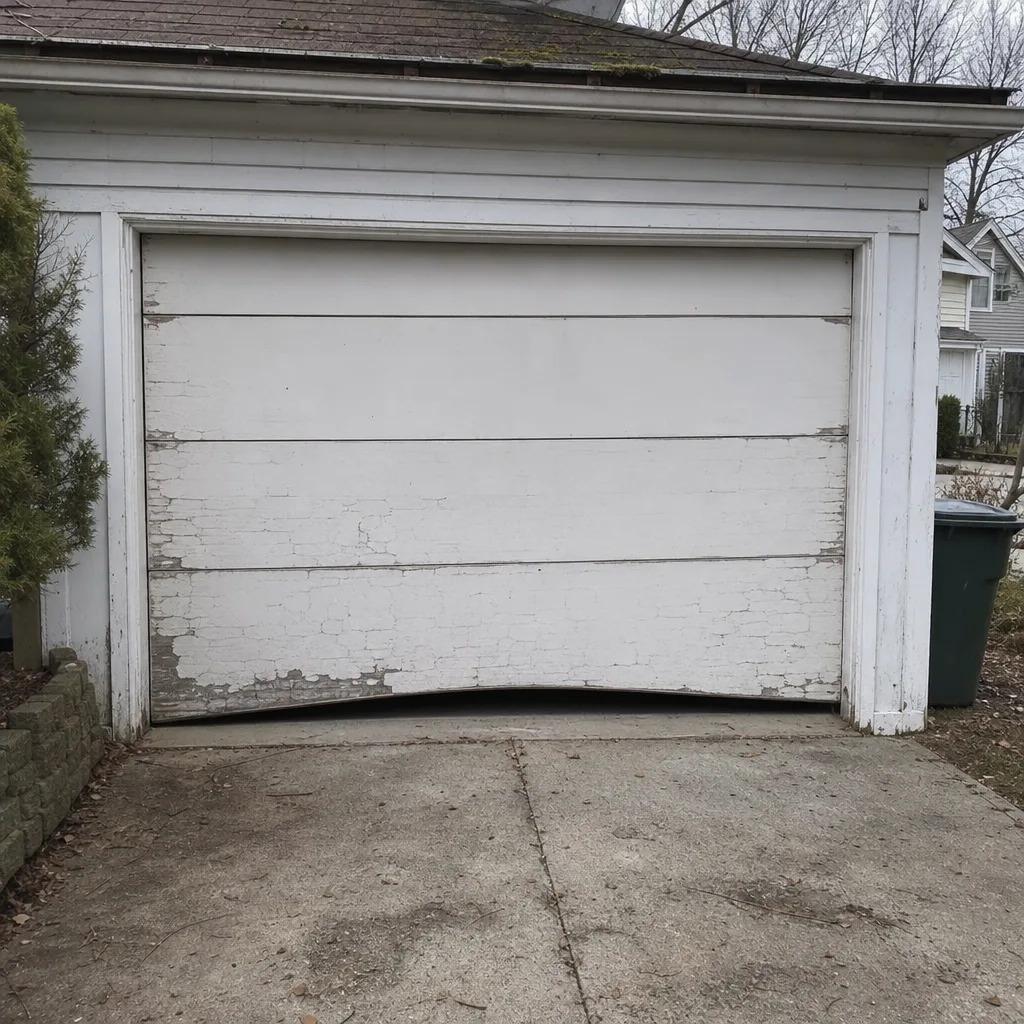
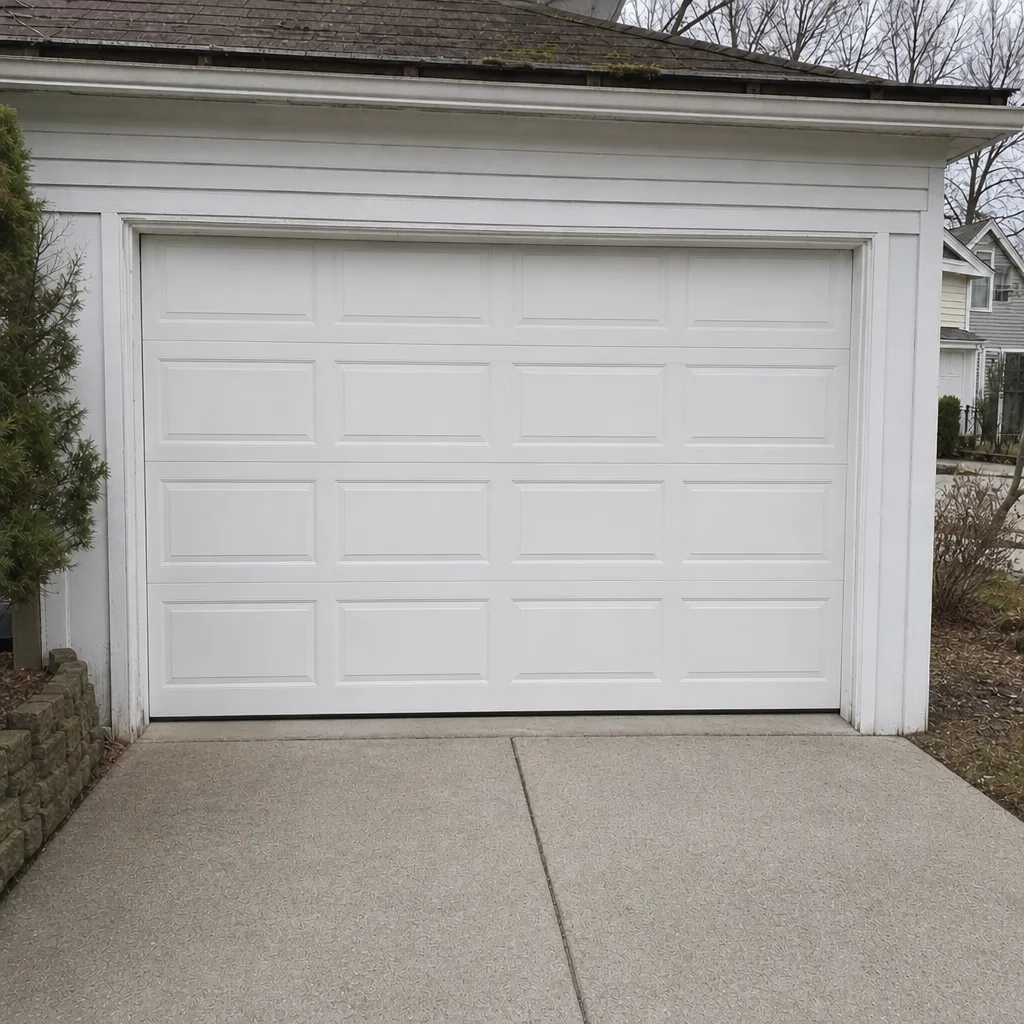
See the difference
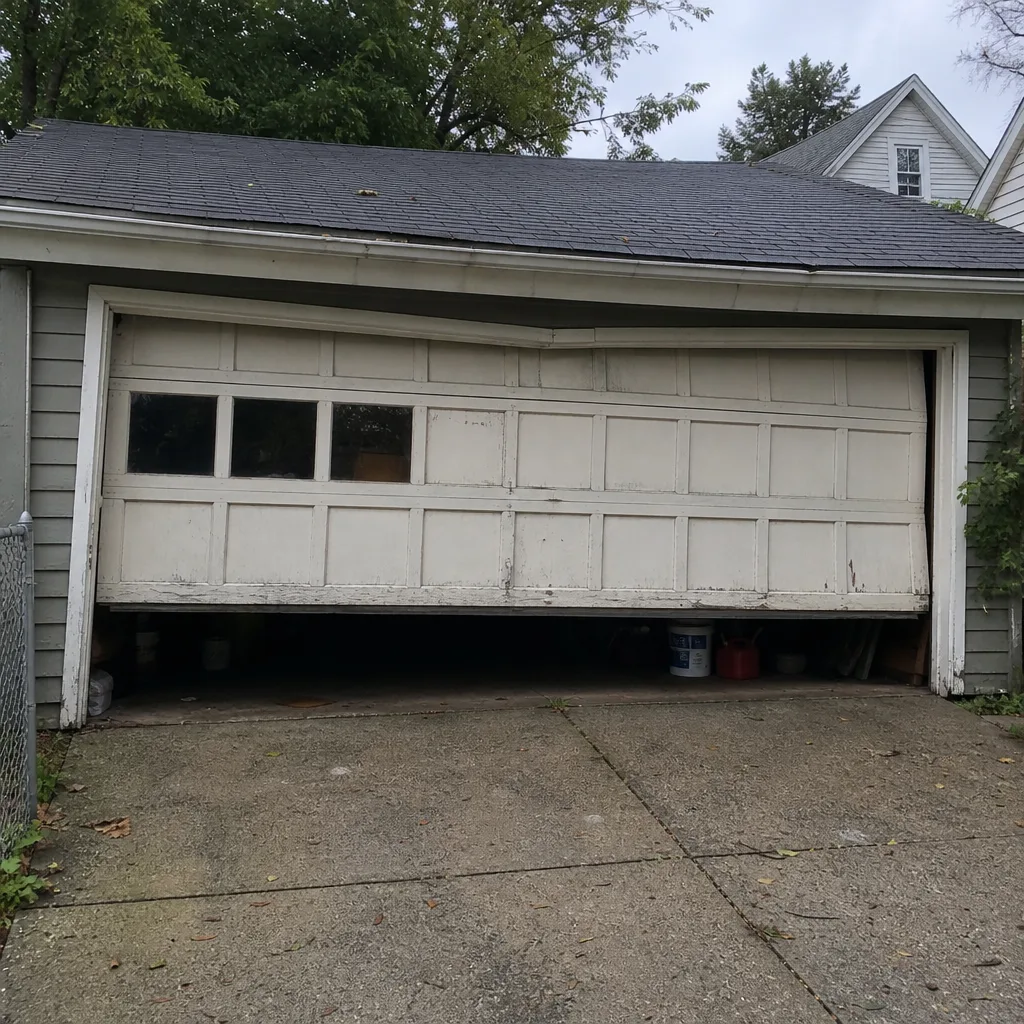 Before
 After
 Before
 After
 Before
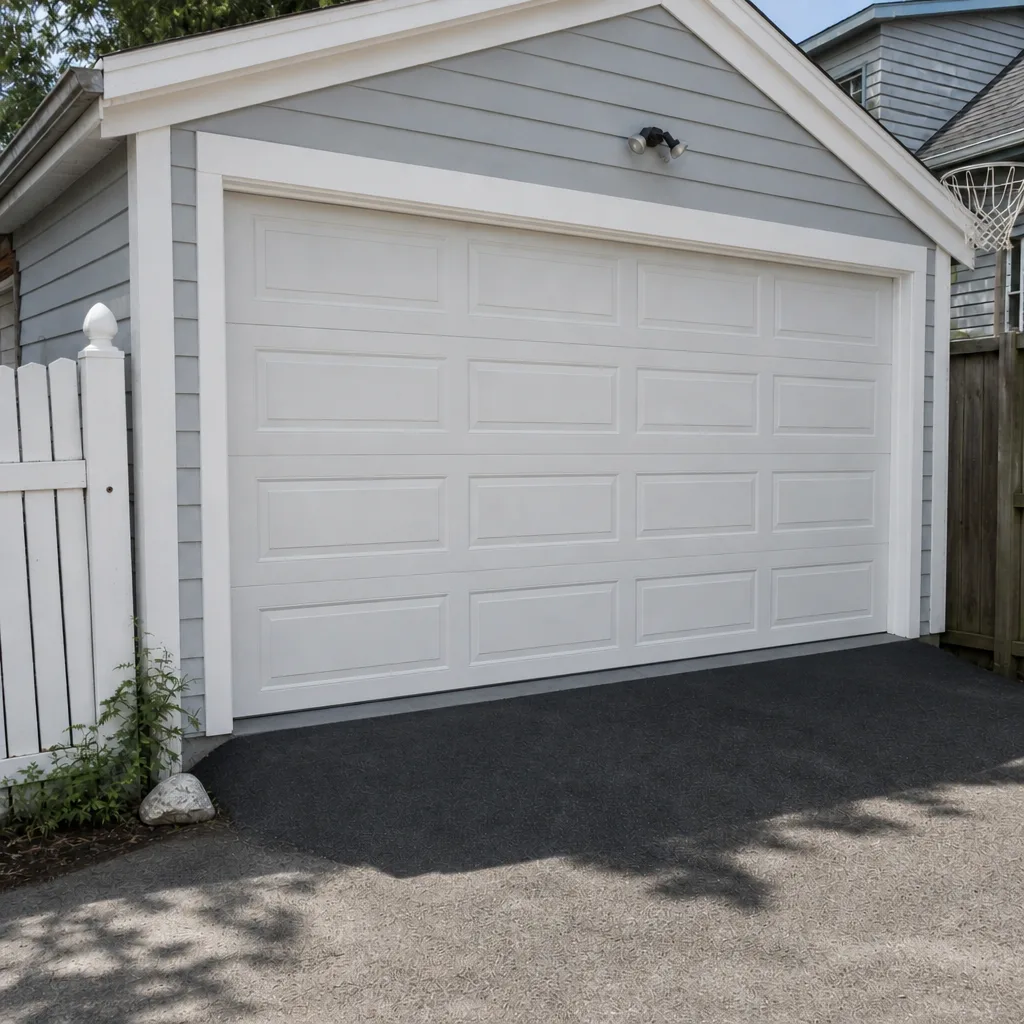 After
When to Call a Professional
Call us when any of the following is true: the spring has broken or the door has lost its counterbalance, a cable is frayed, there’s a visible gap in a torsion spring, the door has come off its tracks, a panel is damaged and needs replacing, the opener runs but the door doesn’t move, or you’ve started a repair and reached a point where you’re not sure the next step is safe. Also call if a door has begun reversing on close and the photo-eye reset didn’t fix it – that’s often a sign of a deeper opener issue. Lowell Garage Door Repair Pros offers free estimates in Lowell and connects you with a vetted local professional who is licensed and insured as state requirements apply. Call (833) 509-5209 to schedule an estimate and get a clear answer on what the door actually needs.
Frequently Asked Questions
No. Torsion and extension springs store enough energy to cause a serious injury if the winding or release process goes wrong, and that risk exists regardless of how comfortable you are with tools. Spring replacement requires rated winding bars, correct spring sizing, and careful set screw control. Call (833) 509-5209 for a free estimate on spring replacement in Lowell.
Roller swaps, bottom weather seal replacement, photo-eye cleaning and alignment, remote and keypad programming, lubrication, and opener travel limit adjustments are all reasonable homeowner tasks. None of them involve stored spring energy or line voltage. Anything touching springs, cables, bottom brackets, tracks, panels, or the opener housing should go to a technician.
Typical estimates for a single torsion spring replacement in Lowell run $180 to $340. A matched pair, which is usually replaced together since both springs wear on the same cycle, typically runs $360 to $680. The written estimate you receive sets the final price, and it’s quoted and agreed before any work starts. Call (833) 509-5209 for an exact quote – estimates are free.
Yes, and it’s more common than you’d expect. Tell the technician the original symptom, exactly what you removed or adjusted, and what changed after. That intake brief lets them diagnose from the correct starting point instead of assuming the door is in its original state. Keep any parts you removed in a bag or on the floor for them to inspect.
We service equipment from LiftMaster, Chamberlain, Genie, Clopay, Amarr, Wayne Dalton, Craftsman, and Raynor. That covers the vast majority of residential systems installed in Lowell homes, from older doors with legacy Craftsman or Raynor openers to newer doors with smart-compatible LiftMaster or Chamberlain myQ drives. Our technicians have up to 11 years of experience across the range.
Yes. Emergency garage door service is part of what we offer, not an upsell added later. A door stuck open creates a security gap and a door stuck closed can block a vehicle or a primary entry point, so both situations justify a call. Reach us at (833) 509-5209 and we’ll get you scheduled. If you’re not in an urgent situation, a regular appointment gives the technician more time to fully inspect the door.
The Bottom Line
The DIY-versus-pro question for garage doors isn’t about how handy you are. It’s about which tasks involve stored energy that can cause injury in a fraction of a second, and which don’t. Rollers, weatherstripping, photo-eyes, remotes, and lubrication are yours to handle. Springs, cables, panels, tracks, and opener internals belong with a technician who works with the right tooling and procedures. That’s the line that keeps Lowell homeowners safe, keeps their doors working through New England weather, and keeps a small DIY mistake from turning into a much larger repair. When a task crosses that line, or when you’re not sure which side of it you’re on, call the team at Lowell Garage Door Repair Pros at (833) 509-5209 for a free estimate. A written quote takes a few minutes and settles the question.
Written by the team at Lowell Garage Door Repair Pros.